



Ukulele is a great choice for beginners as it’s relatively easy to play. However, it lacks range and power. The best baritone ukulele is a better choice as it offers a harmonious blend of acoustic guitars and ukuleles, providing a deeper and richer sound.
Its hollow design and sound hole yield much lower notes and a louder acoustic sound than other types. We checked 28 ukuleles and chose 7 best with Kala KA-B Baritone Ukulele as our Editor’s Choice. We assessed the material used in designing because it will influence the tone and projection, and the weight for its impact on portability and playability. We also looked into the type of baritone ukulele and pointed out their varied characteristics. Lastly, we evaluated the type of strings used for their impact on pitch, and tuners for greater accuracy.
Quick Summary
-
Editor’s Choice: Kala KA-B Baritone Ukulele"A classical acoustic baritone ukulele with a mahogany body, rosewood fretboard, and Graph Tech NuBone nuts for added durability and deep sound"
-
Best Value Baritone Ukulele: Luna Guitars UKE VMB RDS"A uke from the well-known manufacturer comes with red satin finish and pre-strung Aquila Super Nylgut strings"
-
Best for Beginners: Kala MK-B Baritone Ukulele"A model with an unusual materials choice: agathist top and resin sides and back for light weight and easier maintenance"
-
Budget Pick: Kmise Baritone Ukulele"Being the most affordable among all this pick doesn’t cut corners: it features a mahogany body, real ox bone nut and saddle as well as a clear satin finish"
-
Best Sounding Baritone Ukulele: Caramel CB103"This model combines acoustic and electric sound which makes it an excellent choice for professional performers"
-
Best Intermediate: Oscar Schmidt OU53S Baritone Ukulele"A 30-inch long model with appealing and reliable design thanks to the spruce top and rosewood sides and back"
-
Best Acoustic-Electric: Caramel CB500"This eye-catching ukulele also features buffalo bone nut and saddle which makes it stand out of the crowd"
Top 7 Baritone Ukuleles Review 2025
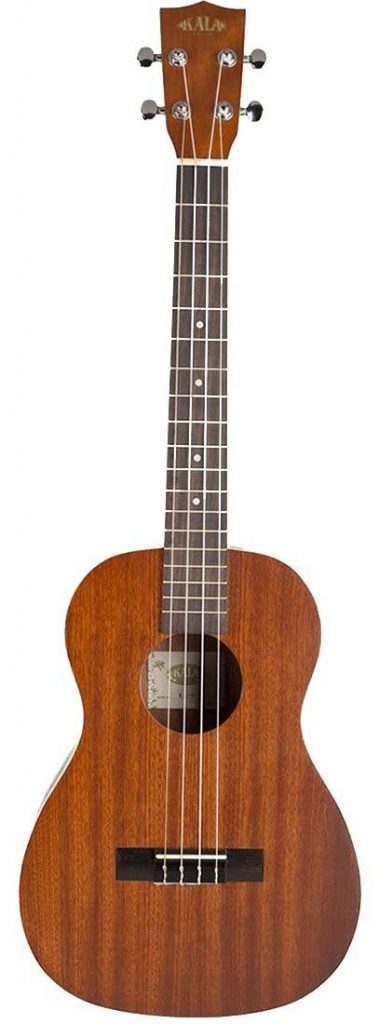
Kala KA-B Baritone Ukulele
- Type: acoustic
- Length: 30-1/2 inches
- Top material: mahogany
- Back and sides material: mahogany
- Fretboard material: rosewood
- Weight: 2.2 pounds
More features: Aquila Nylgut strings; laminate top
This acoustic model features a white binding and long-lasting laminate mahogany top, back and sides, giving it a glossy, vintage appearance. The mahogany exterior adds richness and warmth to your tones. The fretboard is made of rosewood while the 18 frets are durable silver nickel which is resistant to oil and less prone to abrasion. The frets provide a variety of intonations. This ukulele is pre-strung with Aquila Nylgut strings which are gentle on your fingers, and also the most popular because they can withstand string tension. Since they stretch, it is recommended to give the strings some time to settle in for more precise tuning. The chrome die-cast sealed gear tuners make it easy to get and keep the strings in tune. They also facilitate greater accuracy.
The Kala ukulele is light at 2.2 pounds, but you can buy a strap separately for additional support when playing. The light weight increases playability and is comfortable in the hand. The Graph Tech NuBone nuts last longer than plastic ones. This is an impressive ukulele that combines performance with competitive pricing. We particularly loved the ukulele’s sound and simplicity, a sentiment shared by musicians who found it a great alternative to a guitar due to its high quality sound, playability and portability. However, a few buyers complained of fret buzz.
- Rich, deeper resonance
- Durable frets
- Requires minimal adjustment
- Suitable for newbies and intermediate players
- Fret buzz
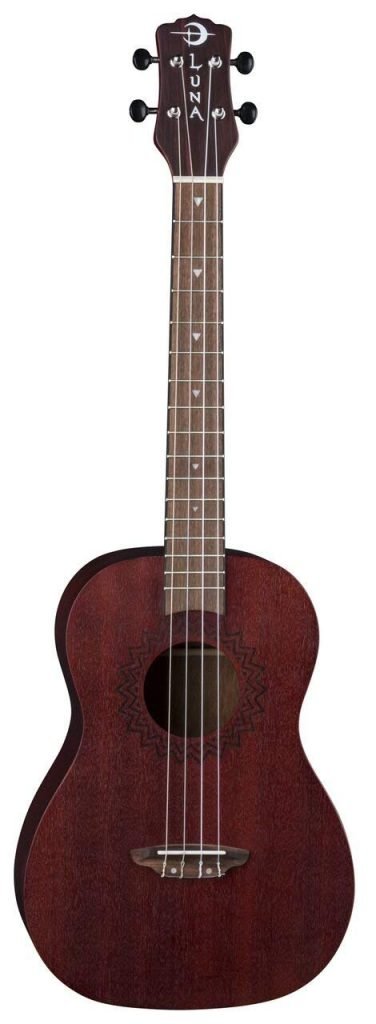
Luna Guitars UKE VMB RDS
- Type: acoustic
- Length: 30 inches
- Top material: mahogany
- Back and sides material: mahogany
- Fretboard material: black walnut
- Weight: 2 pounds
More features: red satin finish; Aquila Super Nylgut strings
This acoustic model is a decent choice for beginners who are looking for the best cheap baritone ukulele whose construction incorporates both aesthetic design and performance, without being flashy. The entire body is made of mahogany, the wood known for its vintage appearance and durability as well as solid tones with punchy and pronounced overtones.
While different neck shapes suit different hand sizes and playing styles, the C-shape of this ukulele will make it easier for you to move your fingers across the frets. Most customers liked the manufacturer’s choice of using walnut for fretboard and bridge because it has almost the same density and grain aspect as mahogany, and is stiffer than rosewood. The red satin color, triangular pearl inlays, and a rose pattern encircling the sound hole add beauty to the overall design. This ukulele features the durable Aquila Super Nylgut strings and open geared tuners which tend to be lighter than closed ones. It also includes 16 frets spaced out along a scale length of 19 inches. A number of customers, however, expressed dissatisfaction with the fret edges.
- Sturdy mahogany construction
- Decent sound output
- Lovely vintage design
- Durable strings
- Sharp fret edges
- Less number of frets than of its counterparts
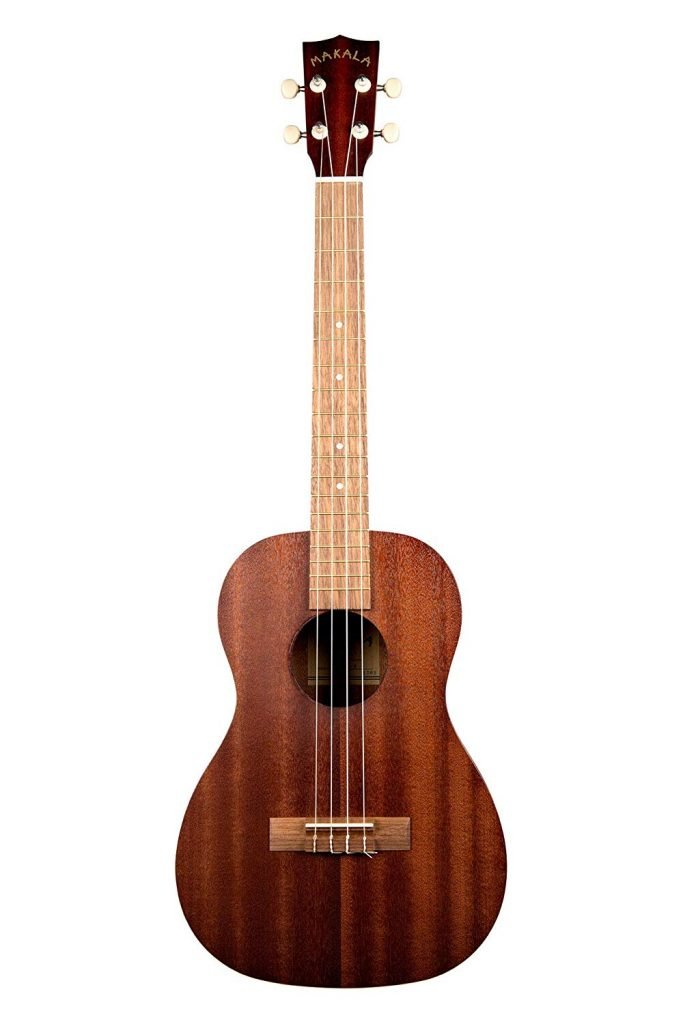
Kala MK-B Baritone Ukulele
- Type: acoustic
- Length: 30 inches
- Top material: agathis
- Back and sides material: resin
- Fretboard material: rosewood
- Weight: 1 pound
More features: satin finish; geared tuners; nylon strings
Kala MK-B is the best cheap baritone ukulele that offers an affordable way to add warmth, depth and volume to your acoustic sound. It features an agathis top which is similar to mahogany in both appearance and tonal functionality being, though, lighter in weight and less expensive. The back and sides are made of resin which is sturdier and delivers more superior tones. The satin finish gives it a smooth appearance while allowing the tonal wood properties to shine.
You can adjust the pitch using the 18 brass frets located on the rosewood fretboard. The geared tuner increases playability and retains the right tone by sustaining steady string tension. Considering geared tuners add weight to the headstock, it is impressive that the Kala MK-B only weighs one pound. Travelling musicians will benefit from that. It is also an ideal choice for beginners who are looking for a low-end option that offers playability, durability and amazing sound output on a budget. Buyers praised this ukulele’s performance and price. However we advise you to buy a set of stronger strings for replacement as the nylon ones that come with the purchase don’t seem durable at all.
- Light in weight
- Sturdy agathis and resin exterior Decent low-end alternative
- Low quality strings
- Case not included
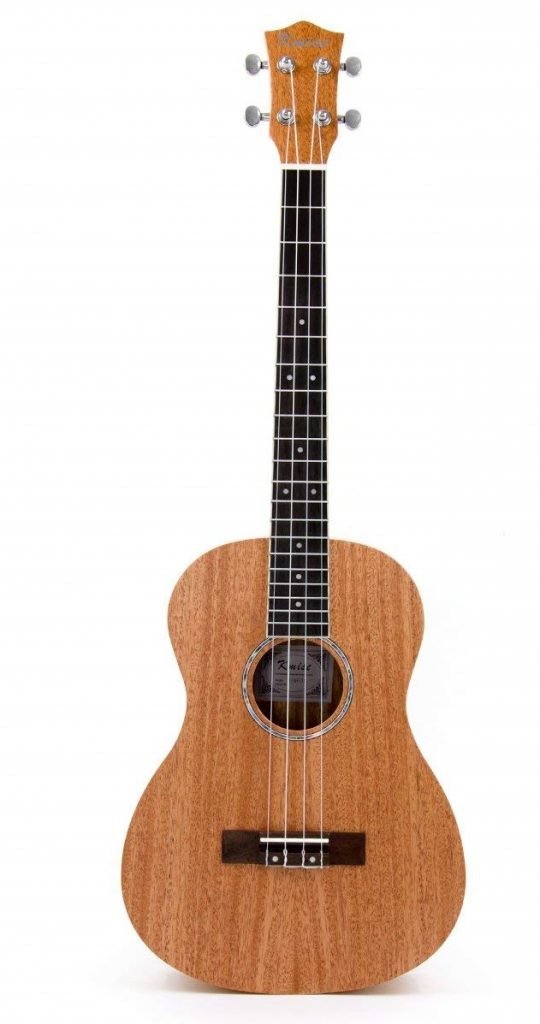
Kmise Baritone Ukulele
- Type: acoustic
- Length: 30 inches
- Top material: mahogany
- Back and sides material: mahogany
- Fretboard material: rosewood
- Weight: 2.15 pounds
More features: real ox bone nut and saddle; clear satin finish
The Kmise Baritone Ukulele is the best cheap baritone uke that you can own without compromising on quality. It is also one of the few options with the GCEA configuration. You will need to restring it to DGBE if you want the lower tones of baritone models. Although it lacks sophisticated features, it has impressive sound output to start rookies off before they can indulge in a costlier model. Experienced players who prefer fingerstyle to flatpicking will also enjoy playing this acoustic ukulele.
The top, back and sides are made of long-lasting mahogany while the fretboard is rosewood. Rosewood generates a warmer and softer tone because it mellows out the sound. The abalone sound hole rosette brightens the look while the satin finish gives it a gentle glow. It also features 18 frets and the reliable Aquila strings. Tension is regulated using the nut and saddle which are made of real ox bone. Bones not only make better tones, but also improve sustain and resonance. Fellow reviewers and buyers admitted that the ukulele was a great bargain with tonal capabilities that trump some of its pricier counterparts. The volume is especially impressive. Unfortunately, a few customers struggled with stringing when adjusting the action, or when changing it from the pre-strung GCEA tuning to the baritone DGBE configuration. We wish the manufacturer would reconsider pre-tuning it to DGBE as it beats the purpose of a baritone ukulele.
- Ox bone nut and saddle
- Durable construction
- Pleasant feel of the satin finish body
- Requires string adjustment
- Underwhelming for professionals
- GCEA tuning
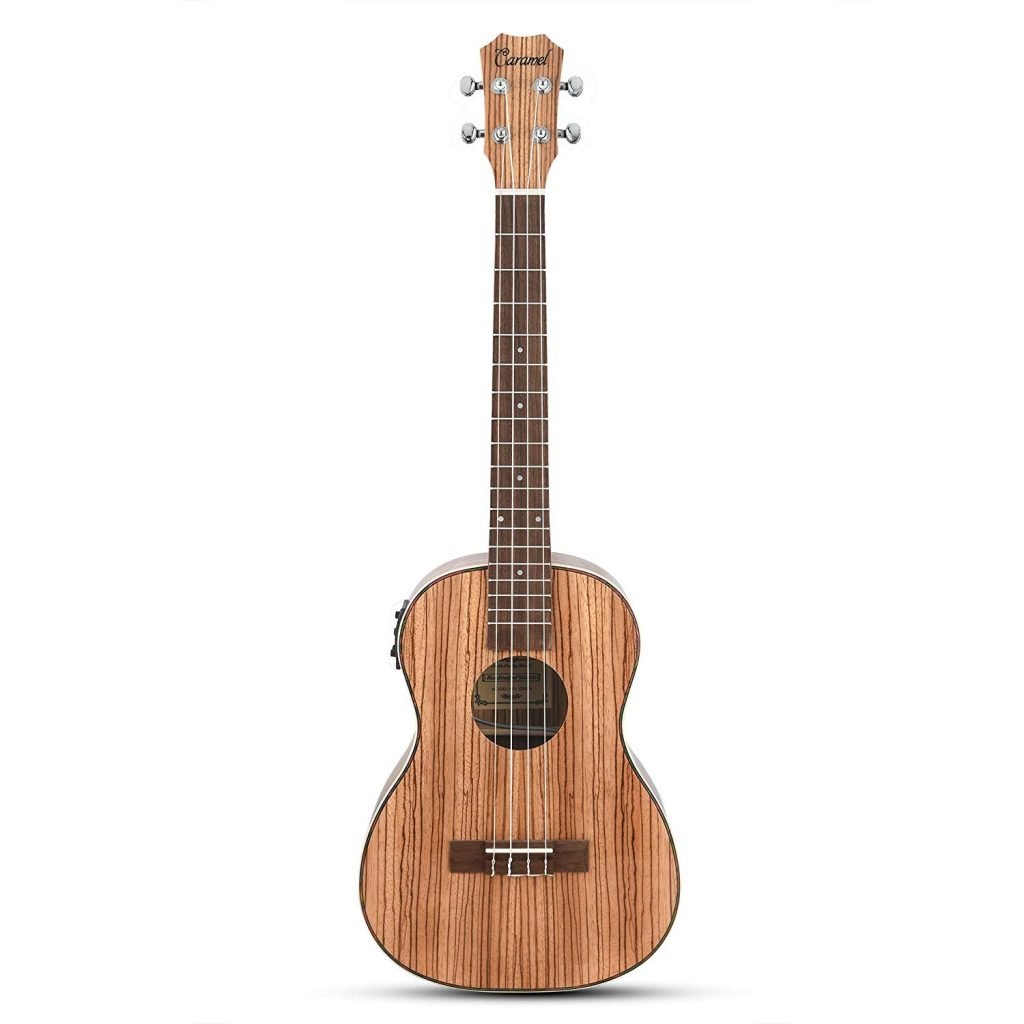
Caramel CB103
- Type: acoustic-electric
- Length: 30 inches
- Top material: zebrawood
- Back and sides material: zebrawood
- Fretboard material: walnut
- Weight: 1.98 pounds
More features: mirror-polished; 3 Band EQ controls: Bass, Middle, Treble; chromatic tuner with LCD color display; low battery indicator
The main body of the acoustic-electric Caramel CB103 is made of zebrawood with a mirror polish for a lustrous look. The polished look makes it smooth but slippery. You can get around this by using a strap for extra support. The fretboard is made of walnut for thorough distribution of sound while the 18 frets provide a wide range of tones.
Being acoustic-electric, it generates decent intonation, both on its own and when amplified. Sound is easily regulated with the bass, middle, and treble band equalizer controls. The chromatic tuner features an LCD colored display that alerts you when the battery is low. Chrome sealed gear tuners lock the Aquila strings in tune to avoid slippage. Since the action is slightly high, the ukulele might require a few tweaks. The truss rod adjusts string tension to straighten out neck curvature. A few buyers experienced premature broken strings which they attributed to their own rough tuning. This model is suitable for newbies and middle-level players on a budget.
- Adjustable truss rod
- Electronic functionalities
- Great amplified and acoustic tone
- Sealed gear tuners and Aquila strings
- Requires minor tweaks
- Sharp fret edges
- High action
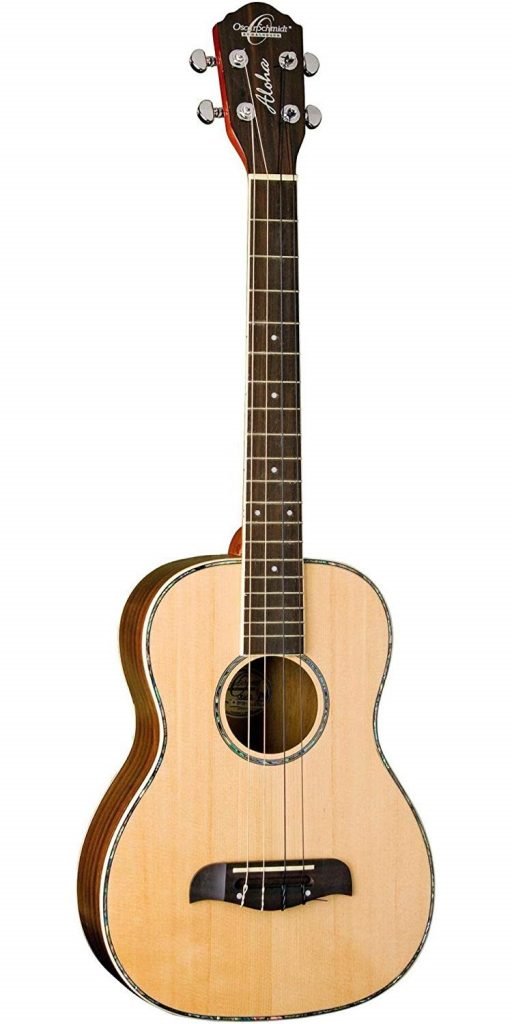
Oscar Schmidt OU53S Baritone Ukulele
- Type: acoustic
- Length: 30 inches
- Top material: spruce
- Back and sides material: rosewood
- Fretboard material: rosewood
- Weight: 3.09 pounds
More features: Abalone top inlays, Aquila Nylgut strings included
Featuring rosewood fretboard, back and sides, this handcrafted acoustic ukulele makes a fantastic choice for newbies. The top is made of solid spruce which is known for durability, light weight and sound clarity. Solid wood maximizes tonal properties without the laminate suppressing it. Durability is further enhanced by the gloss finish which offers protection against extreme temperature and humidity. Abalone adorning the binding and sound hole rosette add to the visual appeal.
This model also features Aquila Nylgut strings and tuners that have been die-cast for strength and longevity. However, the plastic fret marks look somewhat flimsy, and some customers also noted they break easily.
At 3.09 pounds, it is considerably heavier than other baritone models, which makes it sound more like a guitar than a ukulele. Buyers and reviewers have raved about its appealing aesthetics, but some of its construction fell short of expectations. There were reported cases of loose nuts and broken or fraying strings. Others disliked the plastic frets. Not to worry, though, since the ukulele’s warranty covers you for life.
- Appealing design
- Sturdy body
- Die-cast tuners
- Heavier than its peers
- Ill-fitting nuts and fraying strings
- Flimsy fret marks
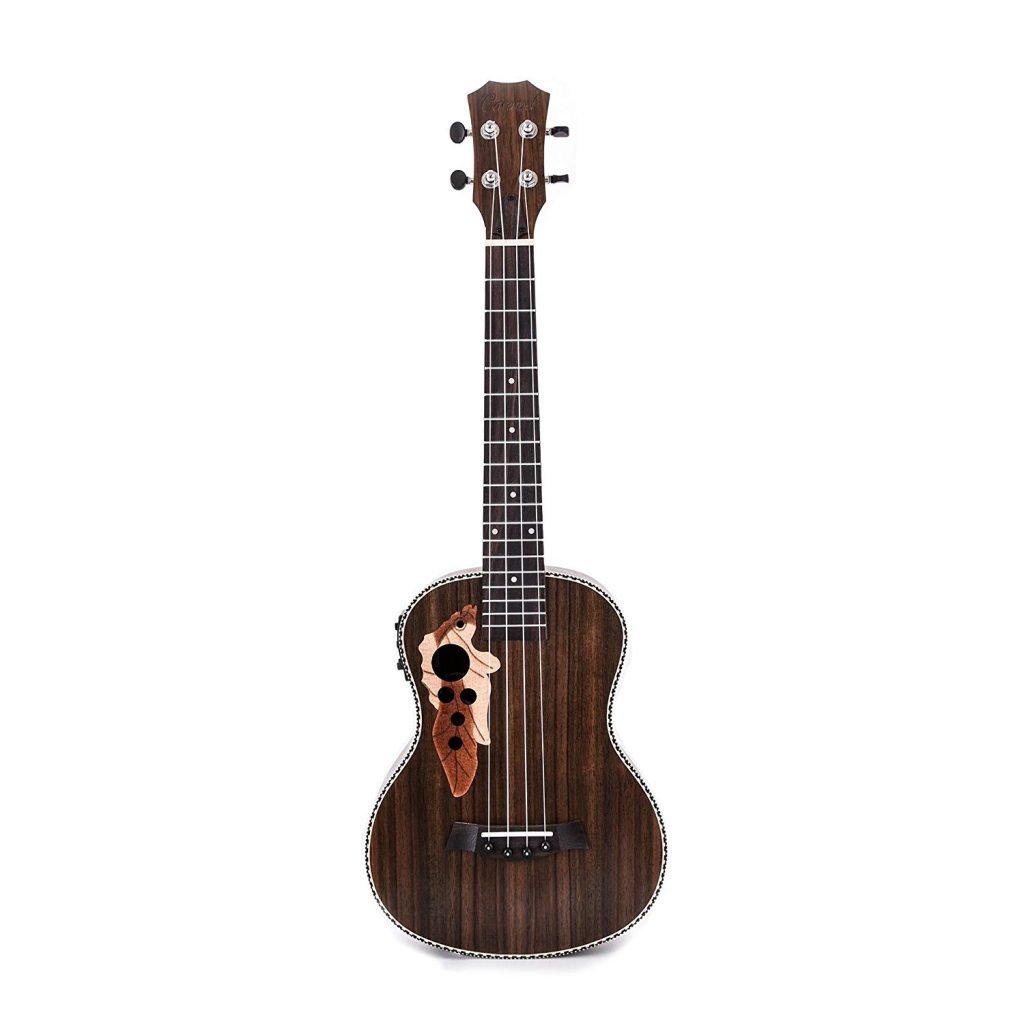
Caramel CB500
- Type: acoustic-electric
- Length: 30 inches
- Top material: rosewood
- Back and sides material: rosewood
- Fretboard material: rosewood
- Weight: 1.98 pounds
More features: buffalo bone nut & saddle; 3 Band EQ built-in tuner
With the exception of the nut and saddle which are made of buffalo bone, the rest of the ukulele – top, back, sides and fretboard – is decked out in rosewood under a satin finish. Rosewood is known to create a more pronounced sound. The scale length of 30 inches creates more space for your fingers, making it a dream to play this model. The adjustable truss rod is held in place by a buffalo bone nut to give you full control over string tension to prevent bending of the neck. Tension can also be adjusted with the saddle. The Caramel ukulele’s neck includes 18 frets. An electric pickup and preamp are included for sound amplification, an advantage when performing in live concerts and stadiums. You can also play it unplugged, making it the best value baritone ukulele.
A built-in tuner and tenor, middle, and bass controls provide a versatile tonal palette. Sound and resonance is maximized by the sound hole. The Chromatic tuner detects and displays the selected notes and low battery warning on the LCD color display. Dual functionality, electronic components, and light weight make this model the best value baritone ukulele.
- Dual amplified and acoustic functionality
- Adjustable truss rod
- 3-band frequency controls
- Chromatic tuner with LCD display
- Sturdy build
- Batteries not included
Advantages and disadvantages of baritone ukuleles
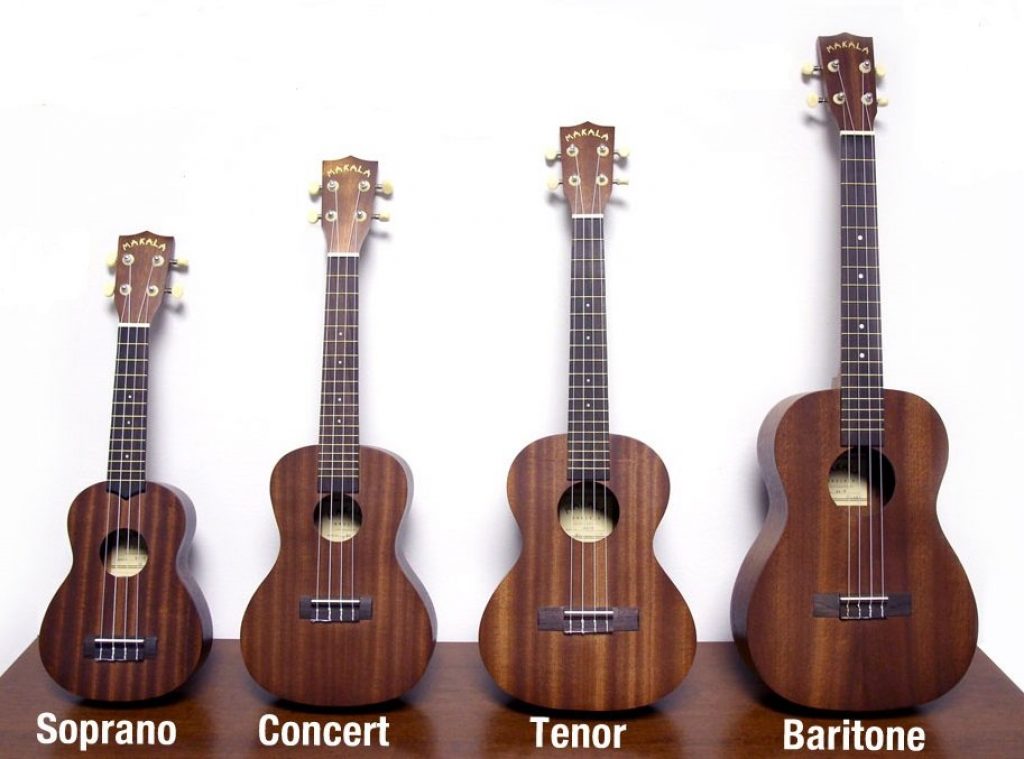
Baritone ukuleles are a great addition to your musical palette due to their wide range, but they might not suit everyone. Below is a list of the benefits of owning one as well as qualities that might work against them.
Advantages
- They provide vocalists and ensembles with a rich, deeper sound and fuller accompaniment for a variety of music.
- Owing to similar chords and tuning, guitarists who want a different sound will find baritone ukuleles a natural progression.
- A long neck and spacious fret separation makes it easy to play complicated chords.
- It has fantastic sustain and resonance.
- Advanced players will enjoy exploring the combination of guitar and ukulele musical styles it provides.
- It provides a harmonious blend of guitar and ukulele tones.
Disadvantages
- They are the heaviest ukuleles, with majority of them bearing a standard length of 30 inches and a scale length of 19 inches. This makes them unsuitable for travelling performers and people with smaller hands.
- Since they are differently tuned from other ukuleles, beginners are likely to have a longer learning curve.
- They are not as widely available as other ukuleles, especially if you are looking for a budget option.
- They lack the traditional bright and crispy sound of typical ukuleles.
Features to consider before buying a baritone ukulele
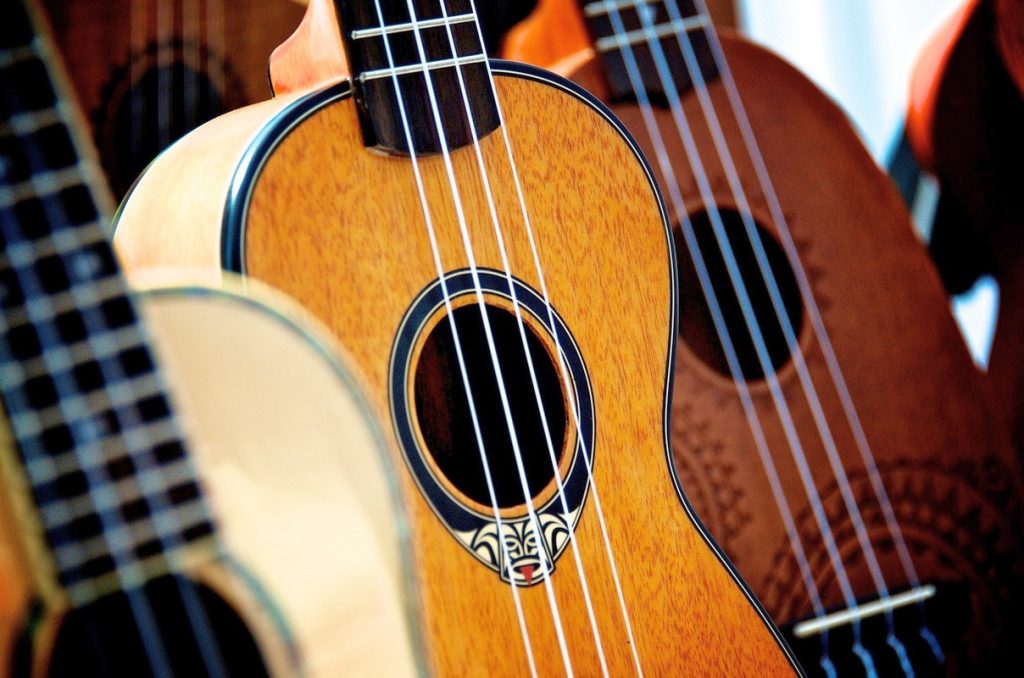
Granted, you can easily be dazzled by all the various ukulele designs, sizes, brands, and models. To ensure you don’t get carried away by ornamental aspects over the essential ones, we have pointed out the fundamental features to consider when making your selection.
Acoustic vs. acoustic-electric
Baritone ukuleles can be acoustic or acoustic-electric. Acoustic ukuleles do not require electronic components to generate sound. They work by reverberating string vibrations in the sound hole and body. Projection is mainly achieved by the size and shape of the body, though amplification can also be done using an external microphone. On the other hand, acoustic-electric models feature a built-in pick-up which detects sound vibrations, then converts them into electrical impulses that are amplified into audibility through a simple plug-and-play process.
While acoustic ukuleles generate sound that has a more natural resonance but lower volume, acoustic-electric produce a brighter tone at higher volume. The advantage of acoustic-electric models is that they can work both when unplugged and when plugged into power. Their high volume makes them suitable for live performances. They also allow addition of effects like reverberation, delay, and distortion.
Materials used for body
Ukuleles incorporate various types of wood and their variations in body construction. Wood is used both sonically and decoratively. Owing to their individual composition, different types of wood have different effects on tone. Some have natural patterns and hues that add character and uniqueness to the ukulele.
Ukuleles may have only one type of wood in the entire body or different types of wood in various parts. Caramel CB500 has the entire body and fretboard made of rosewood while Kala MK-B Baritone Ukulele features an agathis top, resin back and sides, and rosewood fretboard.
The popular types of wood used in body construction are koa, mahogany, spruce, cedar, rosewood and maple.
Solid wood yields richer, mellower and more resonant tones. The sides may feature laminates, which are more affordable and resistant to harsh weather elements. However, laminates can suppress the tonal properties of the wood underneath.
Koa is a dense Hawaiian tropical wood with an exotic grain appearance. It is iconic in ukulele heritage. Koa initially generates bright and crisp tones, then richer and more resonant tones as it ages. Due to its high price, it is mainly used in customized ukuleles.
Mahogany is popular for its stability and emphasized midrange which produces darker and warmer tones. It is also light in weight, and surprisingly loud.
Spruce is light and stiff, resulting in vibrant, articulate and consistent tones. It features a dynamic range that can pack a massive punch, and is frequently used for ukulele tops.
Cedar is commonly used with steel strings. It is particularly responsive to light touches which it amplifies to warmer and more controlled volume, making it a dream tonal wood for strummers and fingerstylists.
Fretboard and neck materials
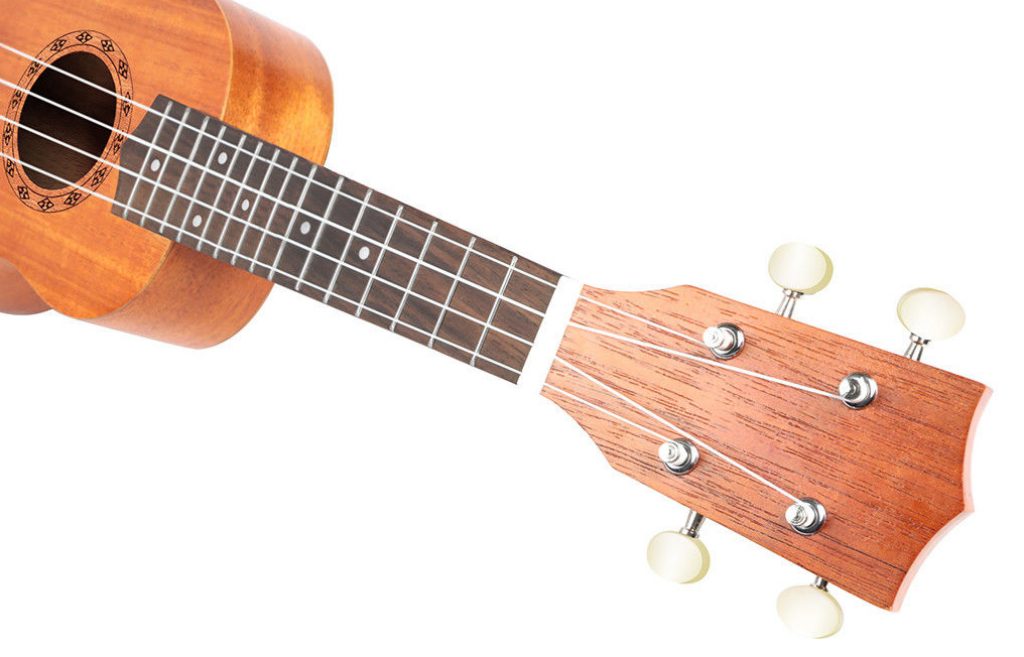
The baritone ukulele neck is usually made of mahogany or maple because both types of wood are strong enough to withstand string tension.
Rosewood, maple and ebony are widely used for fretboards and bridges. Rosewood is the most popular choice for fretboards, as well as ukulele back and sides, due to its sturdiness, hardness and versatility. With the exception of Caramel CB103 and Luna Guitars UKE VMB RDS which have fretboards made of walnut, all the other ukulele models in this guide feature rosewood fretboards. Rosewood yields a well-balanced acoustic sound by deepening lower tones and brightening higher ones.
Being a homegrown American species and readily available has made maple one of the most common tonal woods for ukulele fretboards and bridges. Its denseness and stiffness produces clear and targeted bright tones with minimal decay. It also provides good separation which increases playability for distinctive chords.
Ebony has smaller-sized grain which lends it a smooth appearance that increases playability. It generates sharp and bright tones, and a smooth sustain. Walnut produces bright and clear tones.
Saddles are made of rosewood, ebony, graphite, walnut, brass, bones and plastic. The same materials are used to make nuts. Kmise Baritone Ukulele features real ox bone nut and saddle. The weight and texture of nuts have an impact on resonance and sustain. The best sounding baritone ukulele has well-fitting nuts made of durable, self-lubricating material that makes tuning the strings easy.
Weight
Baritone ukuleles are the heaviest among all. When you have some models such as Kala MK-B Baritone Ukulele weighing a maximum of one pound, every additional milligram counts towards playability. Factors that add to the overall weight include the type of wood and bracing, tuner material, truss rod, built-in electronic components, thickness of finish, and whether the tuner is exposed or enclosed. Wood such as rosewood is denser than mahogany, and the built-in preamp and tuner in acoustic-electric models add to the overall ukulele weight. Acoustic-electric models like Caramel CB103 and Caramel CB500 use ergonomic designs to accommodate the additional electronic components while keeping the weight low. Both models weigh 1.98 pounds only.
Geared tuners are durable and more precise, but if they are made of heavy material, the additional weight to the headstock might knock your ukulele out of balance when you should be knocking it out of the park.
Tuners
While traditional ukuleles use friction tuners to regulate string tension, majority of the current models use geared tuners which are either enclosed in a casing, or open like in the Luna Guitars UKE VMB RDS baritone ukulele. Gear tuners have a higher gear ratio that allows for greater accuracy when fine-tuning. They may also include a locking mechanism that prevents string slippage and enhance sustain and intonation. Friction tuners are lighter and more efficient in string winding due to their high rotational speed, but beginners might lack the finesse to do it with precision. If your ukulele has steel strings, gear tuners would be a better option.
Extra features
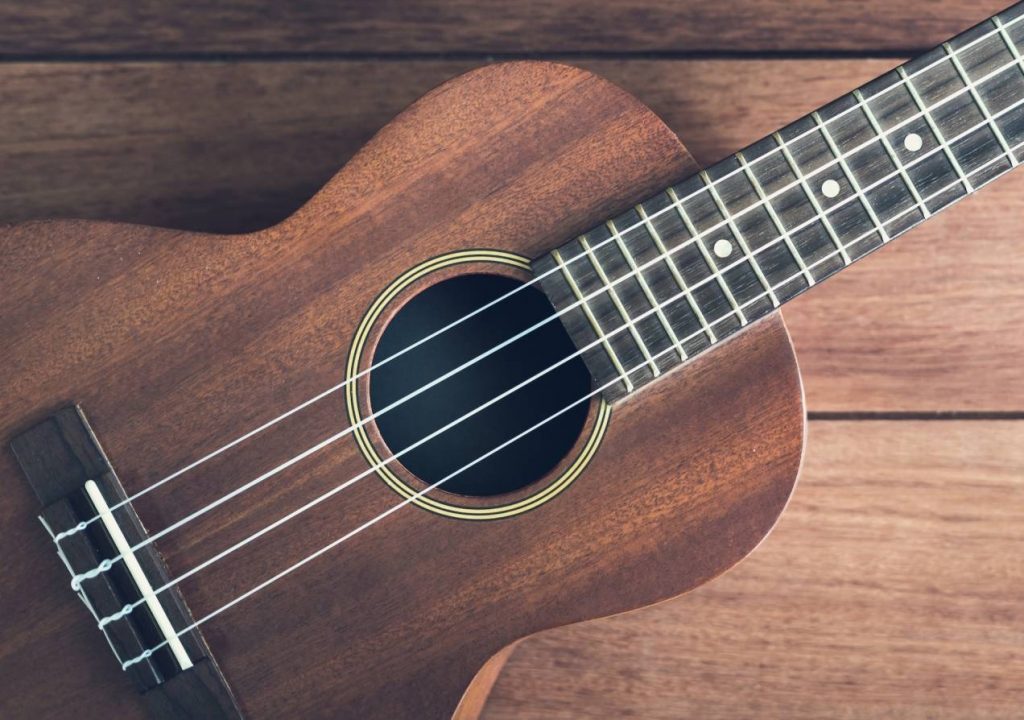
Strings vary in type, tuning, and size. With strings prone to losing their vibrancy and intonation after a while, it is important to choose the best value baritone ukulele strings. The commonly available string materials are nylon, synthetic polymers, titanium and steel. The materials differ in strength, sound produced, stretching capacity, and resistance to natural elements. The best baritone ukuleles mostly feature Aquila strings.
Manufactures also add various patterns and designs for additional visual appeal. For instance Kmise Baritone Ukulele and Oscar Schmidt OU53S Baritone Ukulele feature a rosette adorned with abalone around the sound hole and binding. Some types of wood, such as the zebrawood featured in Caramel CB103, have their own natural patterns.
Another feature to look out for is the type of finish which provides protection against weather elements. A good finish should be light to avoid limiting the tonal properties of the wood underneath. Satin finish is mostly used for a smooth, glossy look and a gentle glow.
Baritone ukuleles may be inexpensive, compared to other stringed instruments, but it doesn’t hurt to know you are covered in the event of unforeseen damage. The lifetime warranty that comes with Oscar Schmidt OU53S ukulele offers great assurance.
How to tune a baritone ukulele?
Baritone ukuleles are like mini-guitars without the two bass strings. Unlike soprano, tenor and concert models which feature the standard GCEA tuning, the baritone ukulele features similar tuning to the four highest guitar strings; DGBE. The strings are ordered from low to high as opposed to the common re-entrant tuning in other ukuleles. Re-entrant tuning has a higher octave G note on the fourth string. You can use GCEA tuning on baritone models to raise the pitch and simulate the chords in soprano, tenor and concert ukuleles. This is done by placing a capo on the fifth fret. You will also need special GCEA strings, like the ones sold by Aquila, to accomplish that.
FAQ
I’m not sure I’ll be able to tune my ukulele manually. What other ways exist?
Is it harder to play than soprano, tenor or concert ukulele?
I’ve read baritone ukuleles sound just like a guitar. Is it true and what’s the difference then?
Which one to choose – an acoustic or acoustic-electric ukulele?
They say it sounds not like the true Hawaiian ukulele. Which one does and why someone buys a baritone ukulele then?
Our verdict
Kala is one of the best baritone ukulele brands. Impressive craftsmanship, competitive pricing, durable material, and a simple but timeless vintage design, is the combination that makes Kala KA-B Baritone Ukulele our first choice. It features a mahogany body and rosewood fretboard, two of the most popular and reliable tonal woods. It is pre-installed with Aquila Nylgut strings, Graph Tech NuBone nuts, and chrome die-cast sealed gear tuners, all known for their quality and durability. The rich, deep tones with lots of sustain further cements its top position on our list.
If you’re looking for a purchase that won’t break the bank, we can recommend the Luna Guitars UKE VMB RDS. With the sturdy mahogany construction and charming vintage design, this product is such an eye-candy. When it comes to sound, the output is decent, especially for such a price.
The Kala MK-B Baritone Ukulele is an excellent choice for beginners who look for an affordable, easy-to-maintain model. Maybe you won’t get the highest quality strings or any case included, but the ukulele itself is very playable and durable, and the sound output is also great.




The comment is made about zebra wood being great for its tone in the caramel
103 uke. This is a laminate uke. The tone you get from it is not what you would get from real zebra wood. This is nothing but a cheap veneer over plywood. It is misleading to describe it as a tone wood on this uke. There are no solid woods used in the body. Only solid plywood.
Thanks for your reply, Craig. The reason of that good sound in Caramel 103 was explained to us by an expert.
But we hope the others will find your opinion helpful, too.