

Beginner sewists often overlook the importance of hemming, that can result in sloppy products and disappointment in the process itself. We will help you find the right device that will make adding finishing touches to the garments a joy.
Our competent team tested 15 products to compile a list of 9 best sergers for beginners, including SINGER Finishing Touch 14SH654 that we picked as our Editor’s choice. We’ve picked models that can work with stretchy and thick fabrics so you wouldn’t have to struggle with broken needles and uneven seams. We’ve also opted for different sergers that can specifically work on children’s clothes and even can be used to teach kids to hem the fabrics. Read on to learn more!
Quick Summary
-
EDitor's Choice: SINGER Finishing Touch 14SH654"Sturdy construction, a long-term warranty, portable weight, and a color-coded threading guide are the most outstanding features of this serger."
-
Best Heavy Duty Beginner Serger: Juki MO654DE"A great option for beginners who are upgrading to a faster heavy duty serger with 2, 3 and 4 threading capability and several programmable stitches."
-
Best Portable Beginner Serger: Consew 14TU858"Light weight is important if you want to carry your serger to classes or clients. This model includes safety features such as a dust cover."
-
Best Value: Brother 1034DX"This is a budget-friendly serger that comes with a good warranty, great speed and a free arm that offers you more flexibility."
-
Best Beginner Serger for Making Clothes: Juki MO-623"An impressive speed and a convenient knife that trims as the serger sews ensures you make many clothes in a short time."
-
Best Beginner Serger for Upgrade: SINGER ProFinish 14CG754"Apart from having 2/3/4 threading capability for diverse stitches and fabrics, this serger is also a cost-effective upgrade with an LED lit working area."
-
Best Beginner Serger for Stretchy Fabrics: Janome MOD-8933"This serger is ideal for stretchy fabrics because it features differential feed that is key in preventing the fabric from puckering or stretching out."
-
Best Beginner Serger for Making Children's Clothing: SINGER S0230"Unless you want to replace your kids’ clothing regularly, you should get this 2/3/4 serger that can create secure stitches and durable seams."
-
Easiest Beginner Serger to Use: American Home AH100"This is undoubtedly the easiest serger to use owing to its lightweight design, built-in handle, extension table, and a color-coded threading guide for beginners."
Top 9 Sergers for Beginners Review 2025
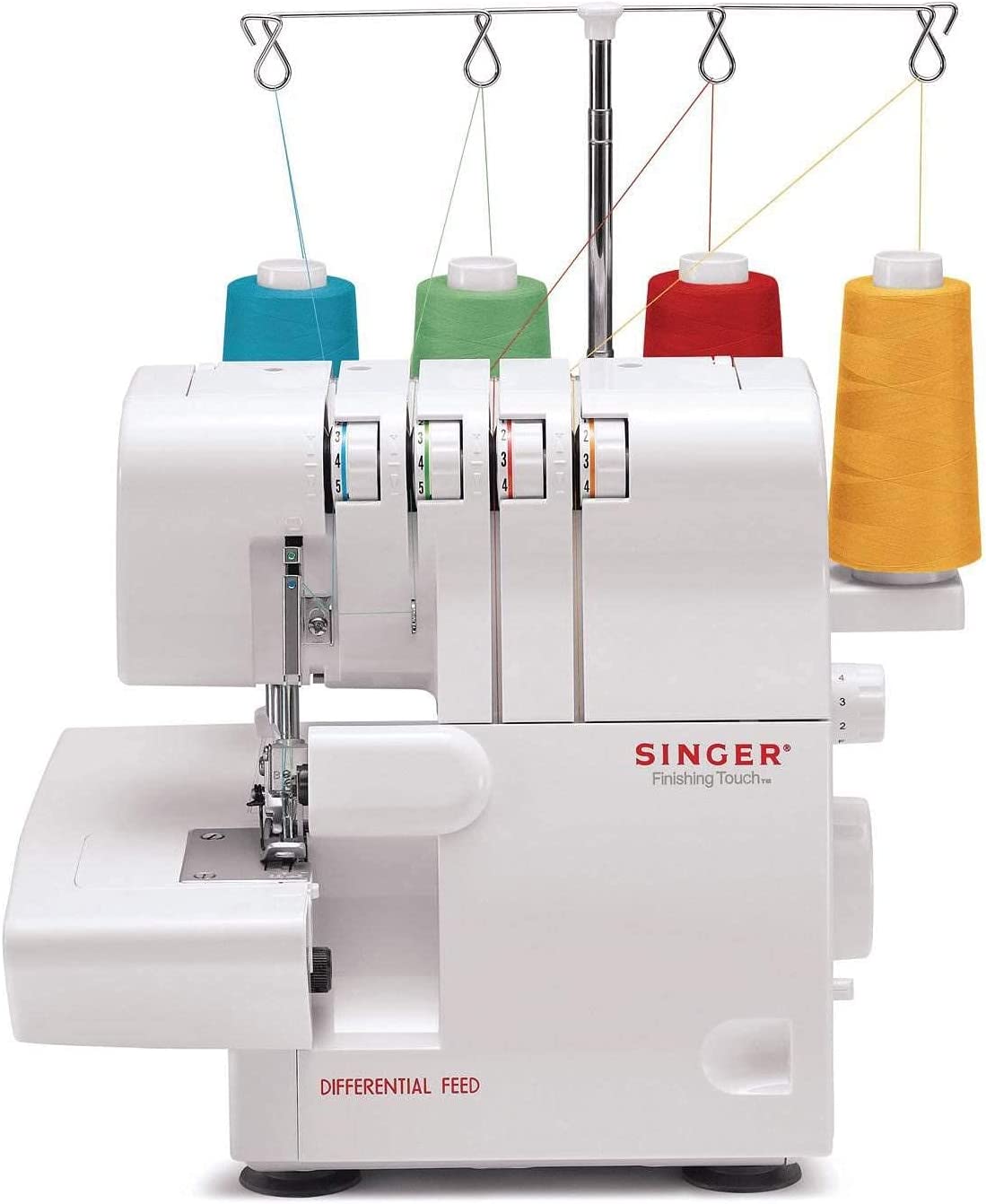
SINGER Finishing Touch 14SH654
- Speed: 1300 spm
- Overall dimensions: 14 x 11 x 11.5 in
- Weight: 13.5 lbs
- Threads: 3/4
More features: 3-7 mm stitch width, 1-4 mm stitch length, 25-year limited warranty, differential feed, heavy duty frame, cutting width adjustment, color-coded threading system, built-in rolled hem, flatlock
SINGER Finishing Touch 14SH654 is our Editor’s Choice because it comes with a sturdy heavy duty metal frame like the other 44-series models, an attractive 25-year limited warranty and a useful color-coded threading system to guide you on the paths that the threads should take. Apart from that, the machine includes a differential feed mechanism to adjust the feed dog speed. It is also among the lightest sergers that we reviewed with a built-in rolled hem function that does not require you to open the machine to activate the function.
This machine is equipped with features that are not available in some beginner serger models. For instance, the Singer Finishing Touch 14SH654 comes with a free arm and a differential feed mechanism that is unavailable in the Quantumlock 4 machine. The light weight makes the machine portable for travel. However, it has 4 built-in stitches that are fewer than its predecessor and other models that cost the same, and only has 3 and 4 stitching capability compared to the Singer X5004HD which is a 2-3-4 serger that can accommodate delicate two-thread stitching. Finally it has limited accessories; screwdriver, needle set and tweezers.
- ProsDecent stitching speed of 1300 stitches per minuteIncludes differential feed mechanism and a free armHeavy duty frameColor-coded threading systemPortable weight for easy travel25-year limited warranty
- ConsThe DVD is useful but the manual can be unreliableLimited 3 and 4 thread sewingOnly 4 built-in stitchesFewer accessories than comparable modelsUnsuitable for sewing heavy fabric
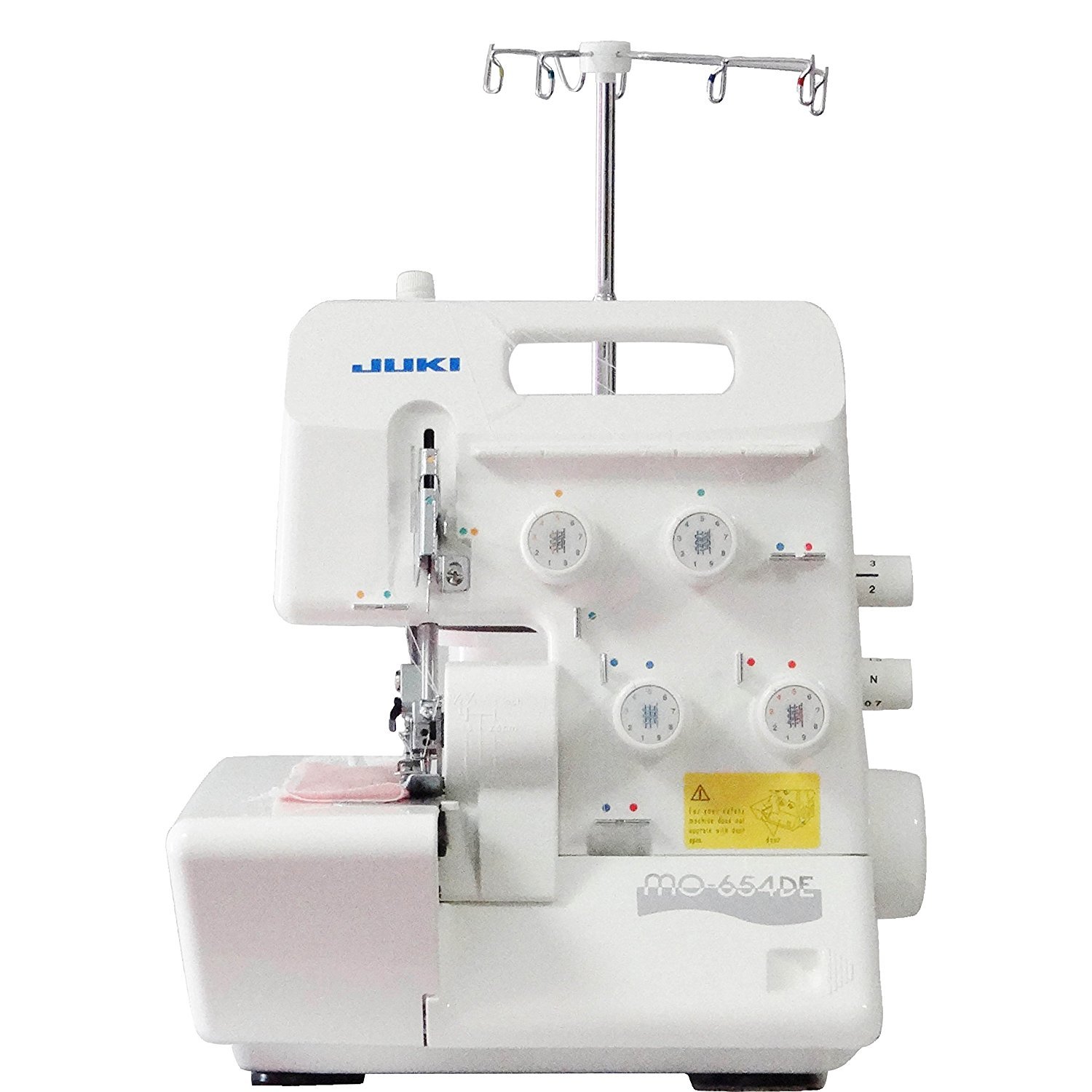
Juki MO654DE
- Speed: 1500 spm
- Overall dimensions: 10.6 x 13.6 x 11.6 in
- Weight: 15.2 lbs
- Threads: 2/3/4
More features: differential feed, 2.5-4 mm stitch length, safety switch, color-coded threading guide, cutting width adjustment, 2-6 mm stitch width, 5 mm presser foot lift, snap-on presser feet
Juki MO654DE has a few features in common with our Editor’s Choice. They include a color-coded threading guide, cutting width adjustment and differential feed mechanism that works well for stretchy or thin fabric. However, it is an overlock and flatlock machine that is capable of 2, 3 and 4 threading and a faster sewing speed of 1500 stitches per minute to speed up your project with professional results. It also features solid construction and weight of 15.2 pounds, providing the best heavy duty beginner serger that can also handle professional sewing tasks.
Juki MO654DE has plenty of built-in stitches; the 20 stitches include 3 thread flatlocks, 4 thread overlocks, 2 rolled hem, 3 thread narrow overlocks, 2 thread overcasts, 3 thread overlocks, and 3 thread rolled hem. The versatile stitches offer a great machine for customized projects. You can adjust the stitch length from 2.5 mm to 4 mm with a knob on the side of the machine to match different types of fabric and the multifunctional presser foot is ideal for adding ribbons, tape or sequins to your project. We also liked the safety switch and working light that is convenient for dark fabrics and poorly-lit environments.
- ProsAdjustable stitch length and cutting widthColor-coded threading guideMultiple built-in stitchesHigh sewing speed of 1500 stitches per minuteHeavy duty constructionSupports 2, 3 and 4 threadingMultifunctional presser footBright working lightSafety switch
- ConsA number of users report that they could not keep the thread in placeThe presser foot lever could be in a more accessible location on the front of the machine
- Our 8 pick for the: best Juki Sewing Machine
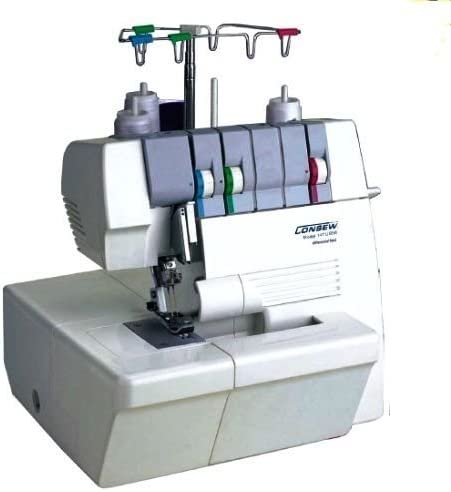
Consew 14TU858
- Speed: 1200 spm
- Overall dimensions: 11.8 x 12.2 x 12.5 in
- Weight: 15.5 lbs
- Threads: 2/3
More features: 1-4 mm stitch length, 3.5-5 mm stitch width, double needles, adjustable presser foot pressure, differential feed, free arm, electronic speed control, 6 mm presser foot lift
Among the most outstanding features of this model is its portability that allows you to travel with it for projects. Consew 14TU858 also comes with a soft cover to protect the machine from dust. Besides that, the portable model includes a looper threading system, tension release mechanism and control dials on the right side of the machine that you use for differential feed and to adjust the stitch length and stitch width, among other functions. You can adjust the stitch length from 1 mm to 4 mm and the stitch width from 3.5 mm to 5 mm.
There are safety features such as the needle guard and the micro-switch that sets Consew 14TU858 apart from its competitors. These features are handy, especially if you have kids at home. Besides that, the machine comes with a built-in LED light, a free arm and an integrated storage system for your sewing accessories. Unfortunately, the sewing speed of 1200 stitches per minute is slower than most of the other models we reviewed. This machine also has limited 2 and 3 stitching capability, is quite noisy and the instructions provided might confuse some users.
- ProsPortable design for convenient travel and storageBuilt-in storage and LED lightAccessible control dials that are easy to useAdjustable stitch width and lengthIncludes protective softcoverIncludes free arm and differential feed system
- ConsRelatively low stitching speed of 1200 stitches per minuteThe instructions provided could be clearer for an easier learning curveLimited built-in stitchesThe machine might vibrate while you work on it
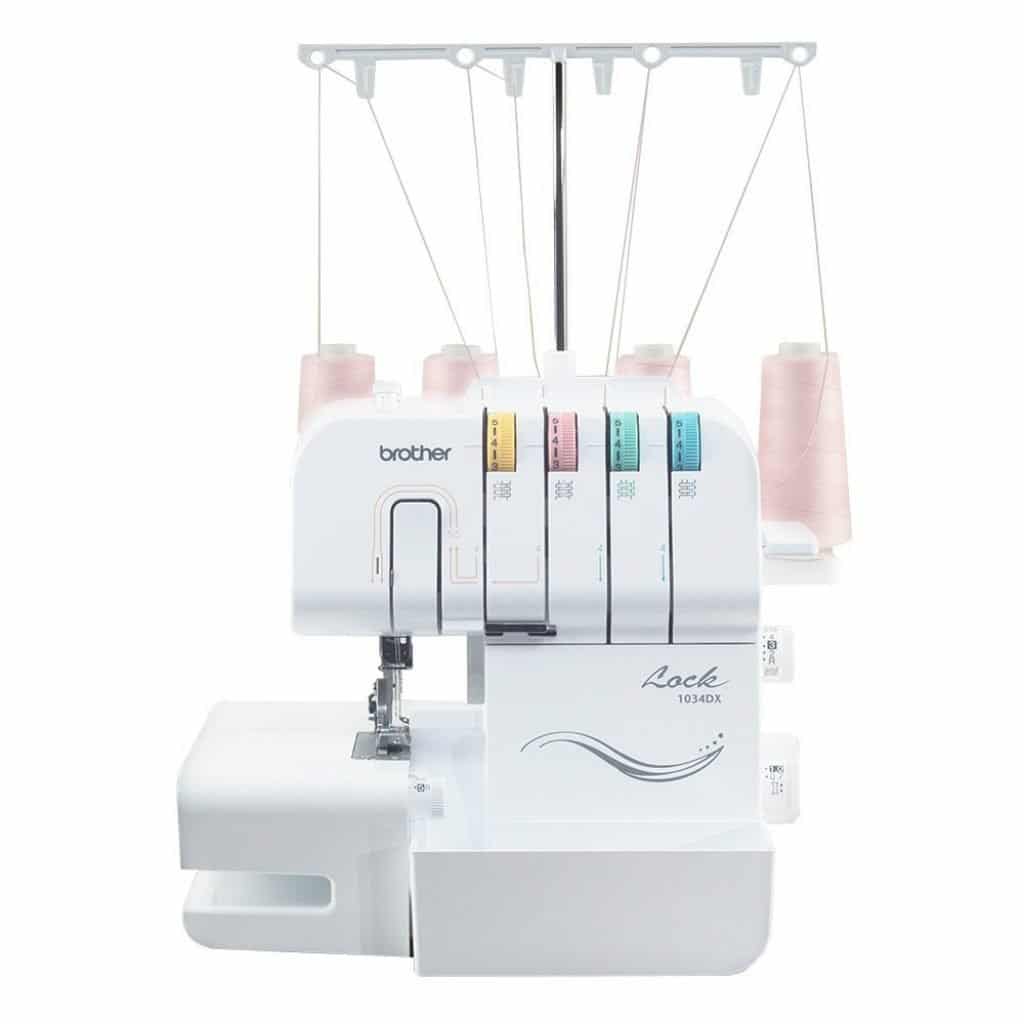
Brother 1034DX
- Speed: 1300 spm
- Overall dimensions: 13.5 x 15.25 x 14.5 in
- Weight: 16.4 lbs
- Threads: 3/4
More features: 3 feet included, LED-lit working area, metal frame, color-coded threading system, removable trim trap, 5-7 mm stitch width, 25-year limited warranty, soft cover included, differential feed
If you are just getting into sewing and you are worried about the cost of a good machine, we recommend the inexpensive Brother 1034DX that has all the features you need to start you off. They include adjustable stitch width, a color-coded threading system and differential feed mechanism that is responsible for controlling the movement of the front as well as the rear feed dogs. The machine has a speed of 1300 stitches per minute and comes with a metal frame, soft cover and a 25-year limited warranty that shows the Company’s confidence in its products.
Brother 1034D is the predecessor of Brother 1034DX which is also a budget-friendly 3-4 serger with a heavy-duty metal frame, a free arm and the same stitching speed. However, the newer model costs more because it has additional stitches that include two roll stitches, LED lighting that has replaced the incandescent bulb and auto thread tension release that is quicker. The controls for stitch length and differential feed are also on different sides of the two machines. Brother 1034DX is a great choice for beginners and hobbyists who mostly do lighter serger tasks such as creating hems and seams.
- ProsComes with a soft dust cover and 25-year limited warrantyIncludes a free arm and additional stitch optionsDifferential feed mechanismColor-coded threading systemAffordable price pointLED-lit working areaGood speed of 1300 stitches per minute
- ConsIt can be difficult to find replacement parts for this modelSometimes the machine vibrates a lot when you are sewingIncapable of delicate two-thread sewingUnsuitable for heavier projects
- Our 6 pick for the: best Sewing Machine For Beginners
- Our 1 pick for the: best Serger Sewing Machine
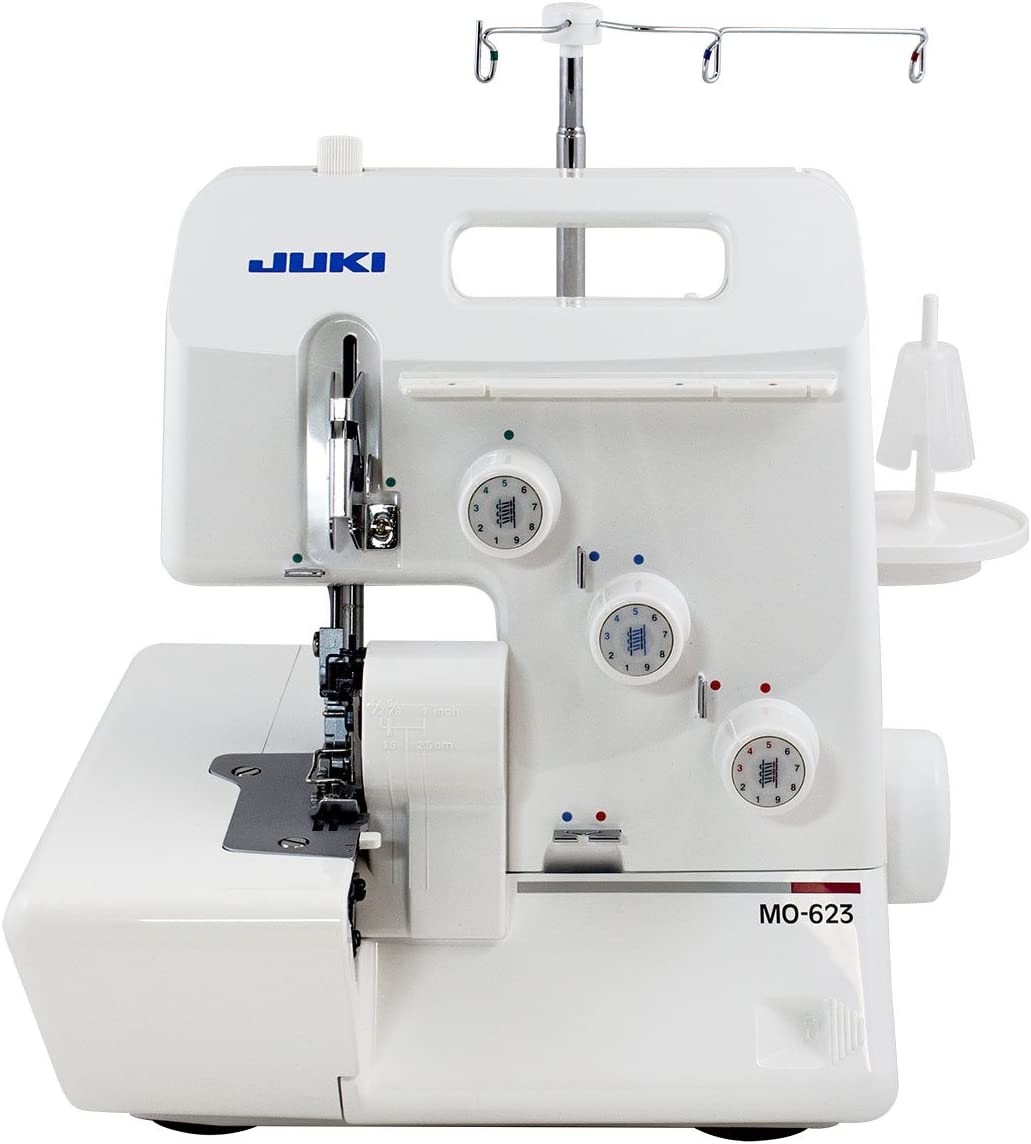
Juki MO-623
- Speed: 1500 spm
- Overall dimensions: 10.6 x 11.6 x 10.2 in
- Weight: 15 lbs
- Threads: 2/3
More features: color-coded threading guide, 1-4 mm stitch length, heavy-duty knife, automatic rolled hemming, 5 mm presser foot lift, 5-year limited warranty on mechanical parts, 2-year limited warranty on electrical parts
What makes Juki MO-623 the best beginner serger for making clothes is the impressive speed of 1500 stitches per minute that ensure you complete your project on time. The 2-3 serger features automatic rolled hemming that eliminates the need to switch the built-in needle plate and a heavy-duty knife that saves you time and effort by trimming the fabric. There are three threads for overcasting and you can also get a two-thread adapter. The machine is made of durable materials and produces high-quality stitches.
One of the disadvantages of this overlocking machine is that you might need some time to learn how to adjust the tension properly. Apart from that, you can consult the included manual and configure the right settings for leather, denim and other fabrics. The machine is available with a 2-year limited warranty on electrical parts and 5-year limited warranty on mechanical components. It also comes with an adjustable stitch length of 1 to 4 mm, a color-coded threading guide and a 5 mm presser foot lift to accommodate heavy fabric. Buyers also receive accessories such as a looper threader, dust cover, foot controller, cleaning brush, and tweezers.
- ProsGreat overlocking machine that creates high-quality stitchesEfficient automatic rolled hemming;
- High speed of 1500 stitches per minuteConvenient heavy-duty trimming knifeColor-coded threading guideAdjustable stitch lengthWarranty on both mechanical and electrical parts
- ConsAs with any other serger, you need to have the right threads to get good stitchesIt takes time to learn how to adjust the tensionThe warranty could be longer;
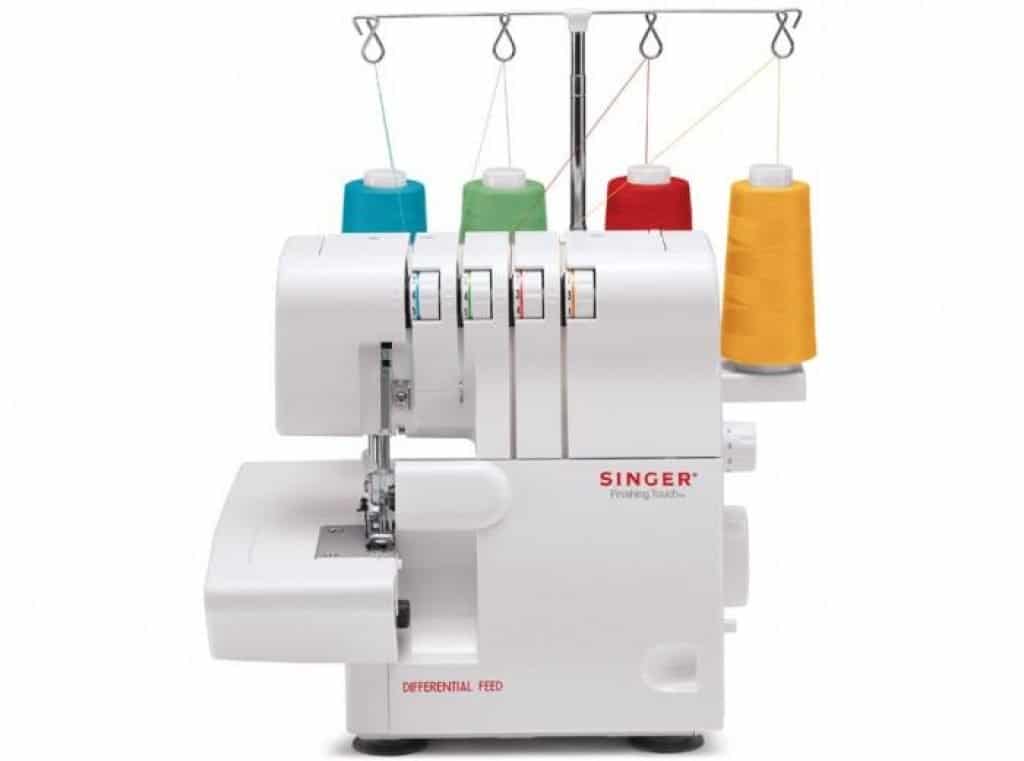
SINGER ProFinish 14CG754
- Speed: 1300 spm
- Overall dimensions: 14 x 11 x 11.5 in
- Weight: 13.5 lbs
- Threads: 2/3/4
More features: 25-year limited warranty, adjustable cutting width, 2-4 mm stitch length, double needles, LED lit working area, free arm, built-in carry handle
For those seeking to upgrade to a machine that can handle a variety of fabrics, we found SINGER ProFinish 14CG754 to be the best option. It can accommodate 2, 3 and 4 threading, supports a high speed of 1300 stitches per minute and is covered by a long limited warranty of 25 years. The machine is also available at a reasonable cost considering its multiple stitch options and other useful features such as a free arm, a built-in trimmer and carrying handle for easy transport, and support for double needles.
The 2-3-4 thread capability allows you to create a flexible seam for knit and woven fabrics and the high speed enables you to finish your work in no time. The color-coded threading guide enables you to set up the machine easily and the four built-in rolled hems are suitable for creating clean hems and decorative designs. Adjustable stitch width and length allows you to create wider seams for heavier fabrics and narrower ones for thinner fabrics. A number of users have complained that the serger is noisy and it can be a struggle to take off the free arm.
- ProsAdjustable stitch width and lengthDecent speed of 1300 stitches per minuteSupports 2, 3 and 4 threadingIncludes built-in handle, trimmer and a free armFour integrated rolled hemsAccommodates double needlesAttractive 25-year limited warranty
- ConsIt is slightly difficult to adjust the tension and to remove the free arm, especially for users with arthritis, because you must squeeze it to remove itSome buyers also find the machine noisy
- Our 2 pick for the: best Serger Sewing Machine
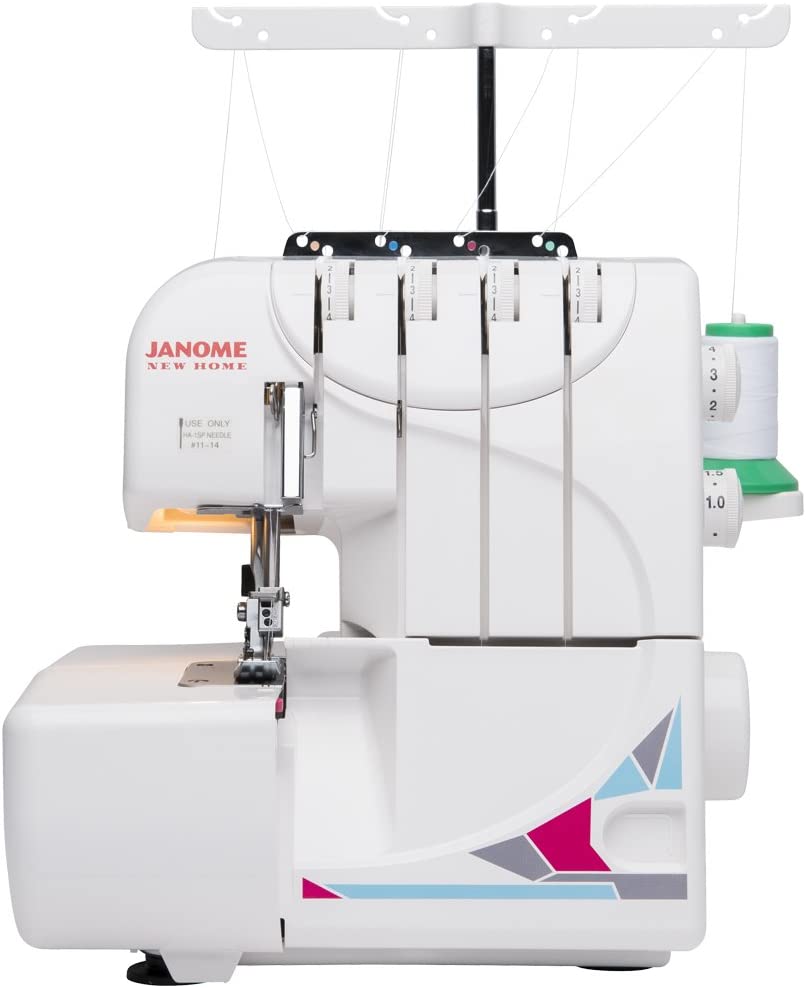
Janome MOD-8933
- Speed: 1300 spm
- Overall dimensions: 11 x 12 x 10.7 in
- Weight: 14.3 lbs
- Threads: 3/4
More features: color-coded threading guide, adjustable presser foot pressure, differential feed, adjustable stitch length, tension release lever, snap-on presser foot, 5-year limited warranty
An overlock such as Janome MOD-8933 is the best beginner serger for stretchy fabrics because it is available with settings you can adjust such as the presser foot and needle to handle stretchy materials. The machine comes with adjustable stitch length, snap-on presser foot, differential feed and adjustable presser foot pressure. It accommodates 3 and 4 threading and you also get a color-coded threading guide, the option to disable the knife and a 5-year limited warranty that will cover manufacturing defects.
It would be great to have a thread tray included to catch thread and fabric and to have a free arm and a storage case for the accessories. Unlike the older My Lock 634D, you might also need to watch the DVD tutorial to understand where to thread for lower looper under the machine since the instructions are not clear. Otherwise, you can use the compact serger to create headbands and sleeping pants and to make edges on flannel cloths and fleece blankets with great results. It is easy to switch to a rolled hem and to adjust the differential feed and the tension to prevent the fabric from puckering.
- ProsSewing speed of 1300 stitches per minuteAdjustable presser foot pressureLower looper pretension sliderPortable weight of 14.3 poundsTension release leverColor-coded threading guide
- ConsIt is a challenge to thread the lower looperThe serger does not include a free arm or a thread trayThere is a learning curve when adjusting the tension
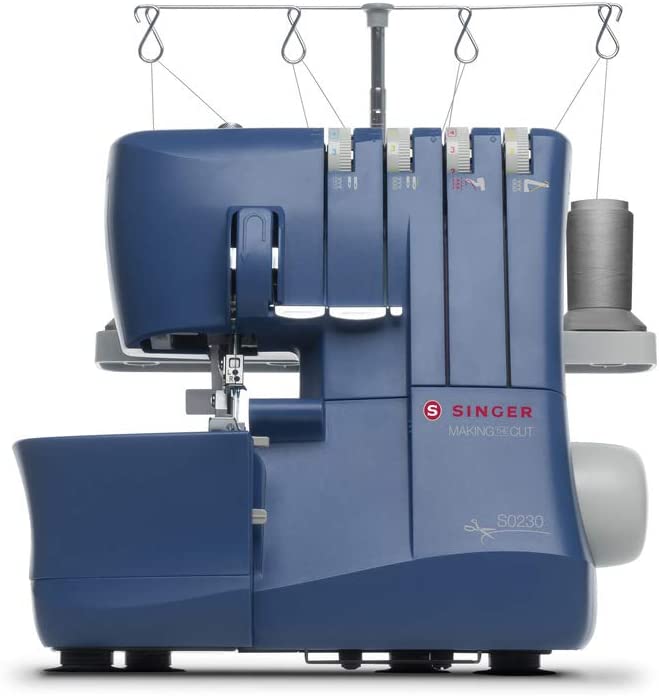
SINGER S0230
- Speed: 1300 spm
- Overall dimensions: 14.5 x 15.25 x 13.5 in
- Weight: 17.2 lbs
- Threads: 2/3/4
More features: differential feed, 6 built-in stitches, adjustable stitch length and width, heavy duty metal frame, 25-year limited warranty, LED-lit working area
We nominated SINGER S0230 as the best beginner serger for making children’s clothing because it features a heavy duty metal frame and has setting that prevent rips and frays in seams especially when stitching stretch fabrics. The overlock machine is a 2/3/4 serger. What that means is that it accommodates simultaneous use of two threads to make individual stitches and to create high-quality seams, blind hems, rolled hems, flatlocking, and to finish raw edges. You can also adjust the tension to secure stitches and make them more durable.
The machine has a great speed of 1300 stitches per minute for faster turnaround, an LED-lit working area that is suitable for areas with low illumination, 6 built-in stitches and adjustable stitch length and width. It also comes with a differential feed that you can adjust separately according to your project to speed up your work and a free arm that is ideal for curved designs such as cuffs, hems and sleeves. You should remove the accessory box to access the free arm.
- ProsThe serger comes with 2/3/4 threading capabilityThe adjustable tension and stitch length allows you to create stitches to your preferenceThe machine includes a free arm and 6 integrated stitchesIt is housed in a heavy duty metal frame and comes with LED lightAlso includes differential feed and speed of 1300 stitches per minute
- ConsYou must adjust the faceplate and tension to stitch hem pantsIt is a bit tricky to change the needlesYou can only get the manual online
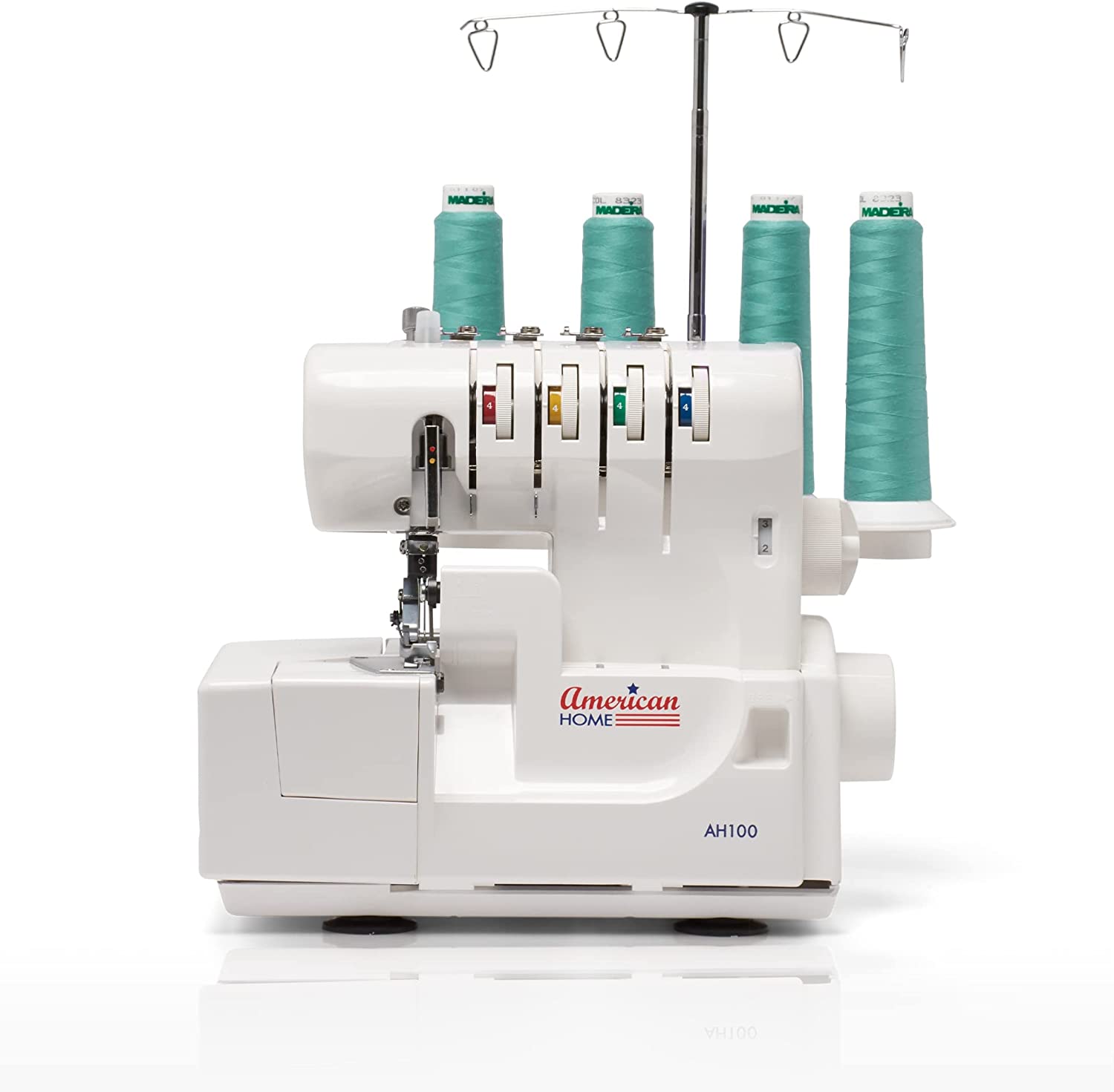
American Home AH100
- Speed: 1200 spm
- Overall dimensions: 10 x 12.75 x 11.5 in
- Weight: 14.8 lbs
- Threads: 2/3/4
More features: adjustable stitch length, PVC cover included, color-coded threading system, differential feed, free arm, built-in carrying handle, 7.2 mm max stitch width
Compared to the other machines we have featured in our review, American Home AH100 has a slower speed. However, it has a number of notable qualities that provide the easiest beginner serger to use. They include a compact and light design with dimensions of 10 x 12.75 x 11.5 inches and weight of 14.8 pounds and 2/3/4 threading capability that accommodates various fabrics. The machine comes with a dustproof PVC cover and a built-in carrying handle that improves portability. Newbies will also find the color-coded threading system in the looper cover useful.
American Home AH100 shares some features with other comparable models; features such as a free arm, adjustable stitch length and a differential feed that speeds up your project. It supports maximum width of 7.2 mm that is ideal for decorative stitches and beading. The serger also includes an extension table that swings out so you can access the free arm and suction cups that secure the serger to prevent it from shifting or slipping while in use. Unfortunately, there is no option to adjust tension and it is slightly difficult to thread the machine.
- ProsIt is easy to set up and use the machineThe serger is light and compact for easy transport and storageYou can use 2, 3 and 4 threadingIncludes built-in carrying handle and dust cover
- ConsThere is no tray to catch fabric trimmingsThere are no instructions on how to adjust the tensionThreading is not easy for some usersThe speed is relatively low
What to Expect from Beginner Sergers?
What you can expect from beginner sergers is reliable and durable machines with a long warranty that should inspire your confidence. Although you can do multiple projects with these sergers, they have limited functions that are suitable for the common tasks. For heavier tasks, you would need to upgrade to the best serger sewing machine for intermediates and professionals. Otherwise, beginner sergers are great options for hobbyists and newbies who either do not have a budget for a premium product or who only perform light sewing tasks.
We’ll provide tips on choosing simple sergers, and we also advice to check this list for the best sewing machine for beginners, so you could start your attire creating journey all set.
How to Use Basic Sergers?
A basic serger is easy to use with the simple instructions that we have listed below.
Threading
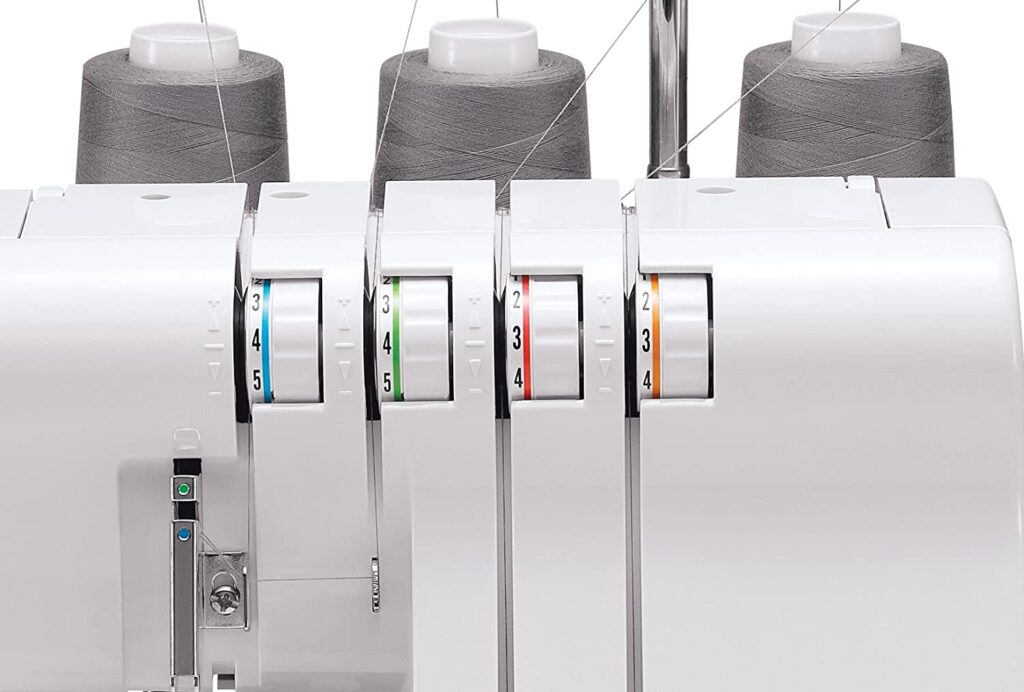
- Turn off your serger before you thread it.
- Next, check your model for the correct threading order. For instance, a 3-thread model will have a single needle thread, upper looper and lower looper.
- Set a spool of thread on the first spindle and pull it below the needles and through the loops under the faceplate, or according to the color-coded guide.
- After that, set the thread on the second spindle and pull it over the front of the serger, using tweezers to help you through the tight areas.
- Finally, insert the thread through the needles.
Finishing seams
Lift the presser foot and turn the dial of the needle to face you so you can lift the needle.
Slide the fabric under the needles and presser foot and then lower the needles and presser foot. The great thing about sergers is that they will cut and finish the seam simultaneously. Cut the edge of the fabric according to the seam allowance number which can range from 1.5 to 2.5 cm.
Guide the fabric as you sew while controlling the speed with the foot pedal.
Make a few stitches that you can later sew by hand.
How to Pick the Best Sergers for Beginners
After reviewing the best sergers for beginners, we will now look at the key features to consider when choosing the right model for your projects.
Sewing speed
High sewing speed can accommodate a large workload and get more work done in a short time. Sewing speed is defined in the number of stitches per minute. Ideally, you should choose a serger with adjustable speed for different types of fabrics and stitching styles. This prevents the machine from skipping stitches as it gives you more control of the sewing pace. The machines we have this function and most, if not all, are made of heavy-duty frames that stabilizes the serger during use.
Number of threads
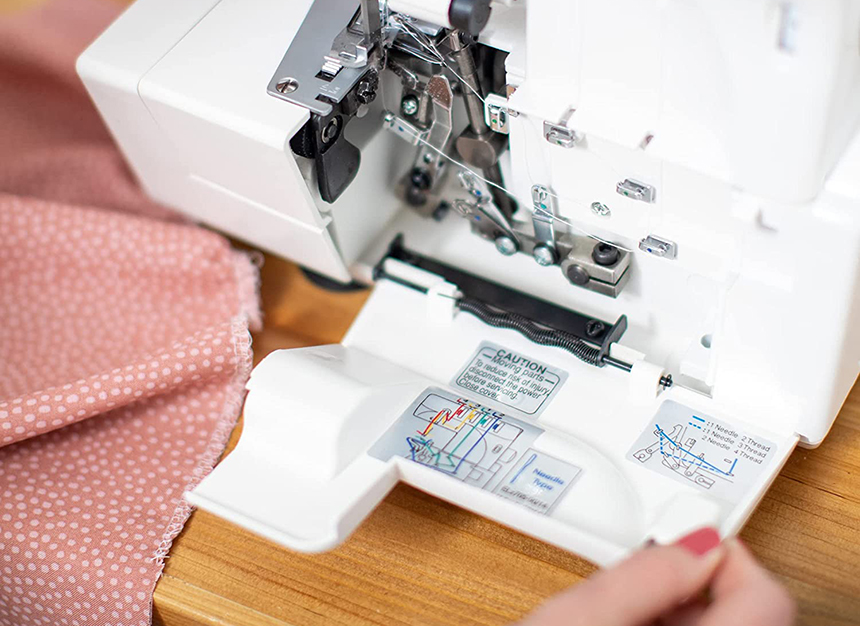
When shopping for the serger, it is important to check the number of threads that come pre-installed in the serger to support various styles and garments. Apart from providing basic preset styles for beginners, the programmable stitches also provide a template for you to tweak and create unique embroidery. Multiple built-in threads offer a plethora of options that allow you to work with light, heavy and stretchy fabrics. If you want a more professional finish on your clothes, we advice checking out our list for the best coverstitch machines.
A basic serger only requires overlock stitch whereas a serger such as Juki MO654DE is more versatile with 2/3/4 threading capability.
Overall dimensions
Another factor to consider when picking the best serger for beginners is the overall size. This matters more if you will be travelling with the machine to classes or clients. Some products include a built-in carrying handle, storage bag and dust cover.
You can measure your working space before purchasing the serger to make sure you won’t have to sacrifice your comfort.
Weight
We have compiled the best sergers that are also lightweight to provide you with options that are manageable and stable during use. Overlock machines that are designed for heavy fabrics are also heavier to accommodate the additional fabric weight and prevent it from making the serger wobble as the fabric moves on the machine.
Threading
When it comes to threading, you would want a machine that is easy to thread, especially the lower looper. It should glide easily through the unit without tangling or forming knots along the edges.
Also, choose a machine with a color-coded threading guide that is printed on the serger for quick reference. We recommend picking a color that matches your fabric when choosing a thread.
Serger threads are made of polyester, cotton, nylon and woolly nylon for different types of fabrics such as sportswear, lingerie and elasticized garments.
Stitch width and length
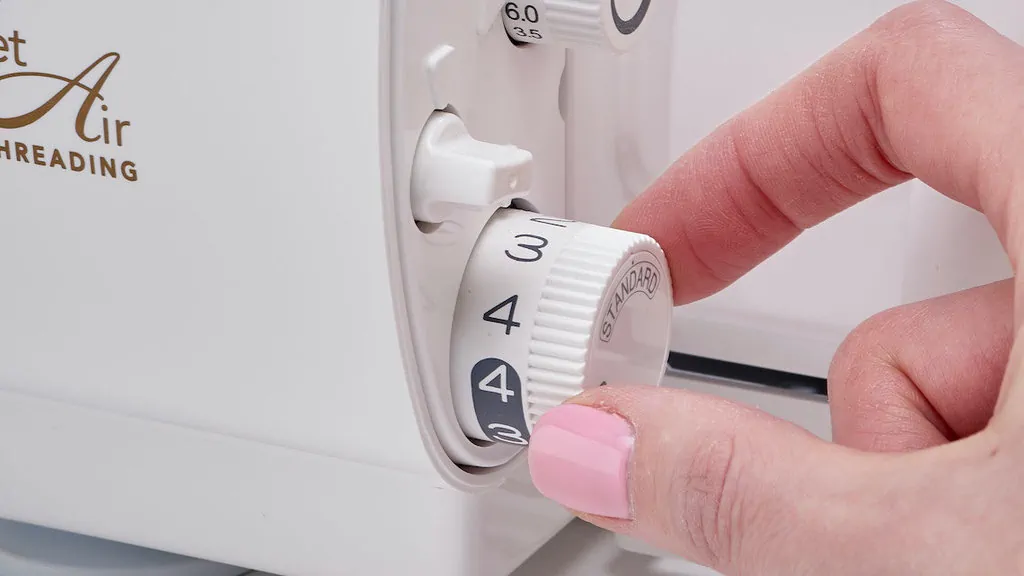
A key feature of a good serger is adjustable stitch width and length that determines the amount of fabric that the feed dogs will move and also allows for basting, hemming and applique stitches. For instance, heavy fabric and multiple layers require less tension and longer stitches to leave space for stretching whereas light and delicate fabrics favor tighter and shorter stitches that also produce smooth curves and corners.
Differential speed
Your machine has feed dogs that move the fabric through the serger when sewing. The differential feed controls the movement of the two sets of feed dogs located under the presser foot. Check the right side of your serger for the differential feed lever that will allow you to set the speed of your front and back feed dogs. It will prevent your fabric from puckering or stretching out.
Cutting blade
Any serger machine worth its salt will come with a cutting blade that will conveniently trim fabric for you as you sew.
A retractable blade that stays out of the way is preferable because it is safer.
Price
The best sergers for beginners come at an affordable cost despite having a number of features that can handle some heavier tasks. However, you will need to pay more for heavy-duty models that are equipped for intricate and complex projects.
Durability and warranty
No one wants to pay for a product that will break down shortly after you receive it. You can avoid this by looking for sergers with heavy-duty frames and warranties that cover various components in case of unforeseen defects. We have featured some machines that come with a limited warranty of 25 years to protect your investment for an extended period.
FAQ
How to maintain my new serger?
Is overlock and serger the same thing?
What is the type of needles I should use for sergers?
Since some serger models are incompatible with regular sewing needles, we recommend getting special serger needles like the color-coded SINGER Universal Regular Point Overlock serger Needles that is available as a set of 5 needles in size 80/12.
Our verdict
At the top of the products we have reviewed is SINGER Finishing Touch 14SH654 which boasts of light weight, a heavy duty frame, built-in rolled hem function, a free arm and a generous warranty of 25 years. Juki MO654DE is a close contender with an impressive speed of 1500 stitches per minute, multiple programmable stitches for custom tasks, 2/3/4 threading capability and a multipurpose presser foot that facilitates decorative stitching. Our two top picks also come with adjustable stitch width and length to suit versatile fabrics as well as a differential feed that prevents your fabric from stretching or puckering.
Our list of the best sergers for beginners also includes Brother 1034DX, an affordable machine with a color-coded threading guide and a soft cover for protection against dust. It also has a well-lit working space and more stitches than its predecessor, Brother 1034D.