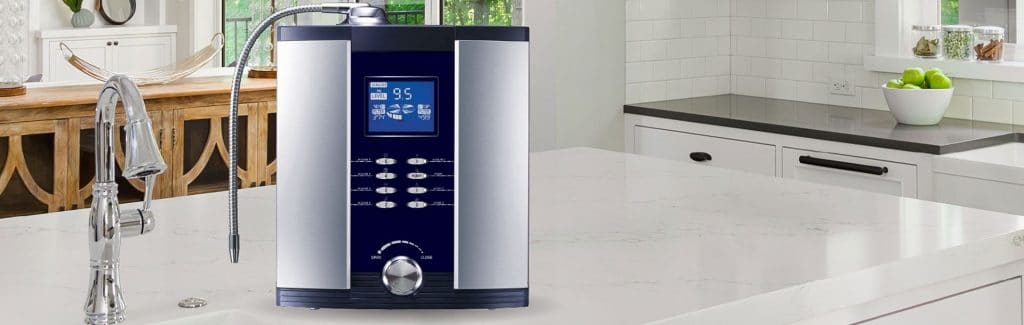


Where I come from, there is a compendium of wise sayings one of which goes “water has no enemy”. I bet you can attest to this maxim as it is a proven fact that you can stay alive without food for a couple of weeks because your body will adapt and find an alternative of using previously stored fat and protein to produce energy. But if you have no access to water for days the end product of that will be death. Simply put, water is life!
Delving into human anatomy, you might have the conception that your bones are made of totally solid components but this is a myth as 25% of your bones is made of water and according to the latest study by the USGS Trusted Source The Water in You: Water and the Human Body | U.S. Geological Survey Water is indeed essential for all life on, in, and above the Earth. This is important to you because you are made up mostly of water. Find out what water does for the human body. www.usgs.gov suggests that around 2/3 of your body is water. Typically, we need about 2.4 liters of water per day to stay healthy and for these reasons it won’t catch anyone by surprise why we love our water having all the qualities of a good one – colorless, odorless, and tasteless. It is for this reason that people spend a lot on things like a water filter that will guarantee them removal of impurities and safe consumption.
Now, “how do water filters work?” “How to do I clean a water filter?” “Are they really necessary?” These are probably the queries that are going through your mind. Worry no more as this article will answer all your questions in a simplified manner.
Without further ado, let’s begin!
How Often Should You Clean Water Filters?
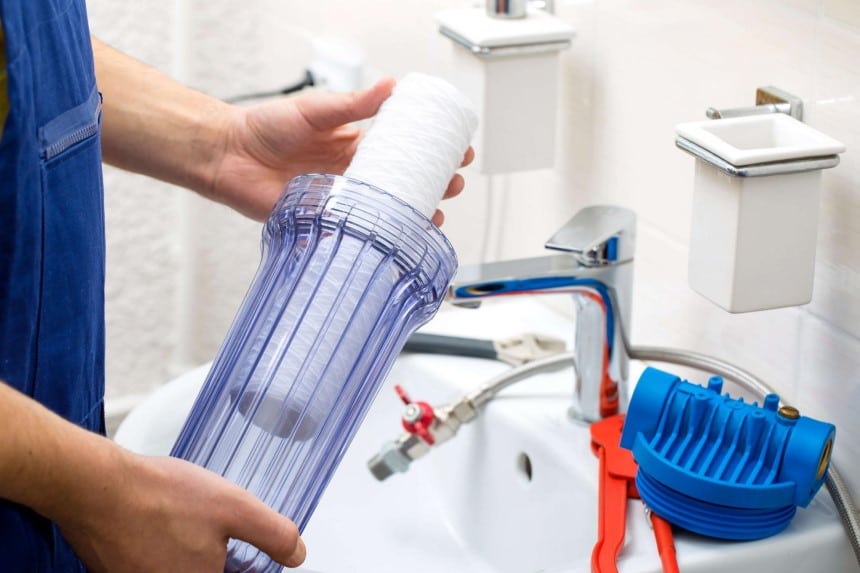 Analogically speaking, just like your tooth brush is recommended to be changed after a couple of months, so does a water filter not only to protect it from bacteria build up but also to maintain its effectiveness and elongate its lifespan. As a rule of thumb, the cleaner they are, the better they work. It won’t suffice to just tell you how to clean your water filter when you have no idea has to how it works in the first place. Let’s succinctly state “how filters do work”.
You might undergo a bit of trust issues when you think about the water you are about to use or intake especially if you have a good grasp of how the water cycle works. One minute it is rushing down a river, the next it is running out of your tap and sitting inside a glass on your table so to be believing of the source of your water you can run it through a water filter which works using two different techniques (physical and chemical filtration) to eradicate filth. Physical method is done using possibly a thin gauze or a very fine textile membrane while chemical filtration method consists of passing water through an active material that ousts dirt chemically when they pass through.
Cleaning Water Filters by Type
Now that you are well abreast of when, why you should clean your water filters, then the next step is to know how to clean your water filters according to its type. These approaches use slight energy and are quite affordable in your bid to maintain your filtration systems. Do you need to find one of the best water filters out there and you are wondering what the parameters might be try the iSpring CU-A4.
Carbon/Charcoal Filters
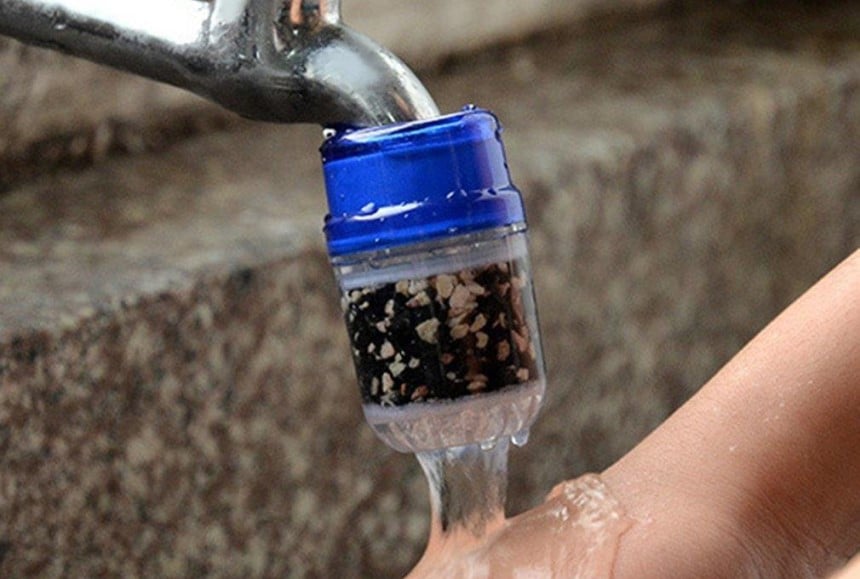 The process required in cleaning an activated carbon or charcoal filters is comparable to how you should clean your reverse osmosis filters which will be discussed in a later part of this article. First thing to bear in mind is since you will be handling chemicals you need not only wear your protective gear such as gloves, mask, and to curb exposure of your skin to harmful chemicals but also be in a space with first-rate ventilation. Below is the step-by-step guide;
- Get half a gallon of clean water at room temperature and pour it in a bucket.
- Add two cups of muriatic acid using a plastic stirrer to stir constantly.
- To ensure that no fragments or build-up is clinging to your filter, rinse thoroughly using a hose then put it inside the solution you made in the previous step allowing your filter to sink into it.
- Do not remove the filter for at least five days from the solution if you want to be sure that it is purged of any contaminating substance. Please note that it is important that the mixture stays exactly at room temperature so always check to ensure that.
- Place your filter in clean water to soak for like five minutes after taking it out of the mixture.
- Finally, reinstall your filter after rinsing it with a hose and being certain of its cleanliness.
You can also simply rinse your charcoal or carbon filters if you want to go down the easy lane. The major downside to this simple method is that you might not be effectively rid of toxins and other build-ups on your filter.
Reverse Osmosis
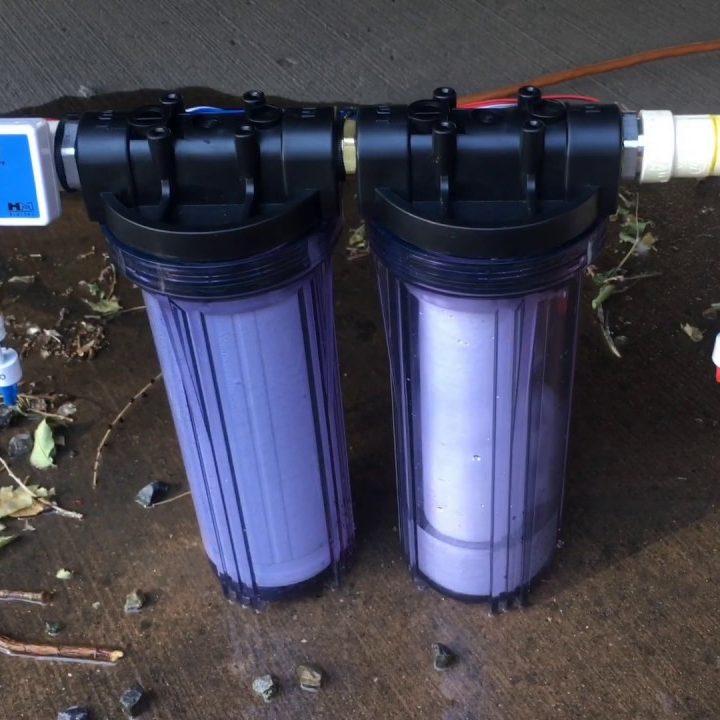
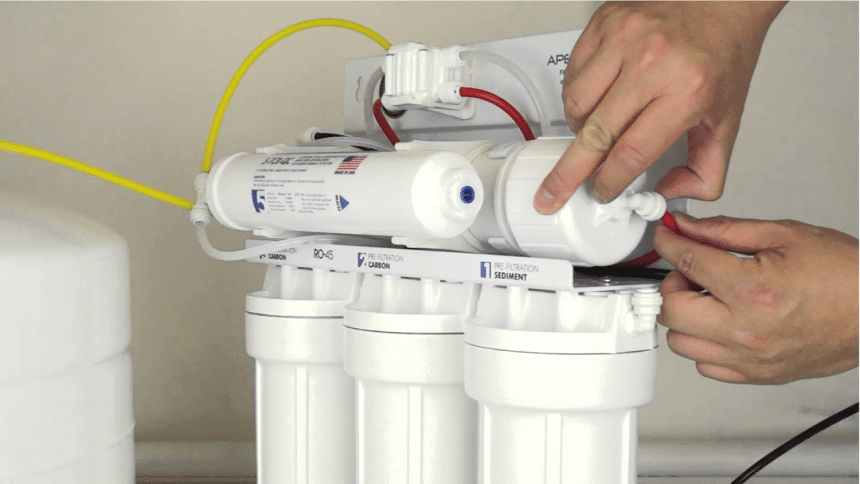 When cleaning these types of filters, wash your hands thoroughly and if you’re making use of rubber or medical gloves don clean them. As a fact, reverse osmosis filters have two levels they work on. The first being the reverse osmosis membrane filter and this is where your system does most of its work i.e. its productivity lies in the first level. The second level is embedded in the pre-filters which are either made of or use activated carbon. Great example of reverse osmosis system is Home Master TMAFC-ERP. When carrying out the step-by-step process don’t forget to cut off the water supply to the filtration system.
- Close up the tap attached to the filtration system and out the water from the system and tank also.
- Probably using a wrench, open the case up and bring out the pre-filter and the reverse osmosis membrane.
- Sanitize the system using chemical cleaners like fragrance-free bleach about two to three tablespoons depending on manufacturers’ opinion.
- Dispense the cleaner into your pre-filter casing and allow the water run through and rinse the tap to completely get rid of any debris.
- Wash the reverse osmosis membrane with the cleaner and rinse carefully to be void of any chemical remains.
- Finally, reconvene and restart your system.
If you have a reverse osmosis type of filter, you should carry out this cleaning process at least once a year.
Refrigerator
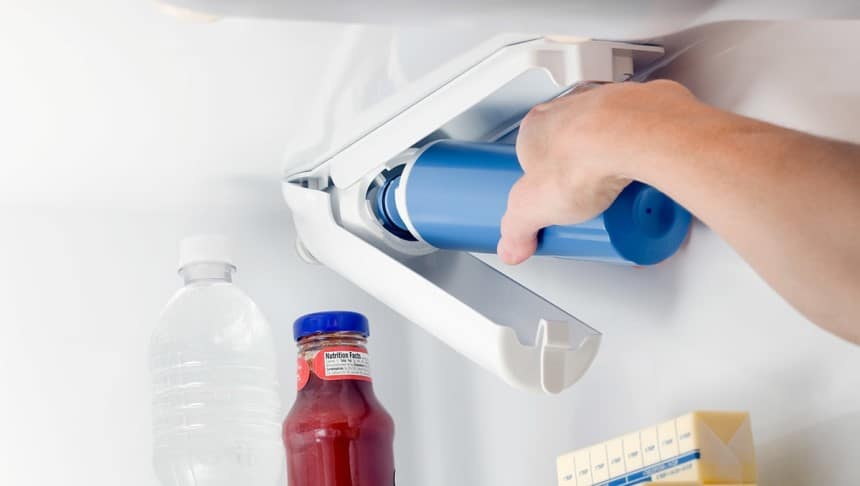 Cleaning your refrigerator filter is also as important as the rest of the types. Do the following to insure and ensure the durability of your fridge.
- There should be a release button in the back and top of the refrigerator where the filter is situated. Turn this release button to the left and pull out the filter from the refrigerator.
- Soak the filter either in vinegar, alcohol or soap after emptying all the crud from the filter.
- Take it out of the solution after like fifteen minutes and leave it for about an hour to dry.
- Finally, put back the filter in its casing after ensuring the threaded openings are secure.
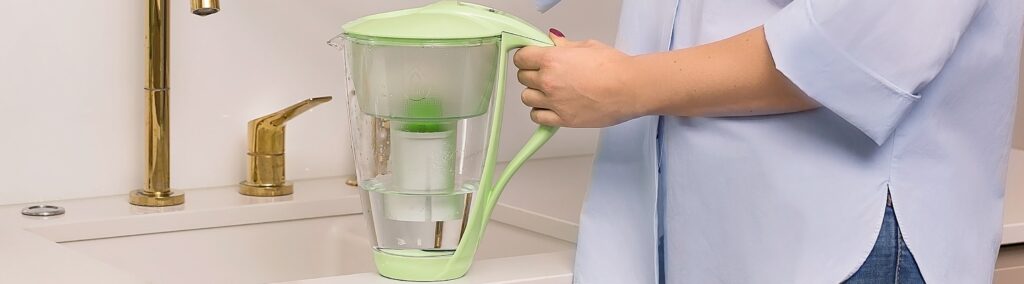
Pitcher
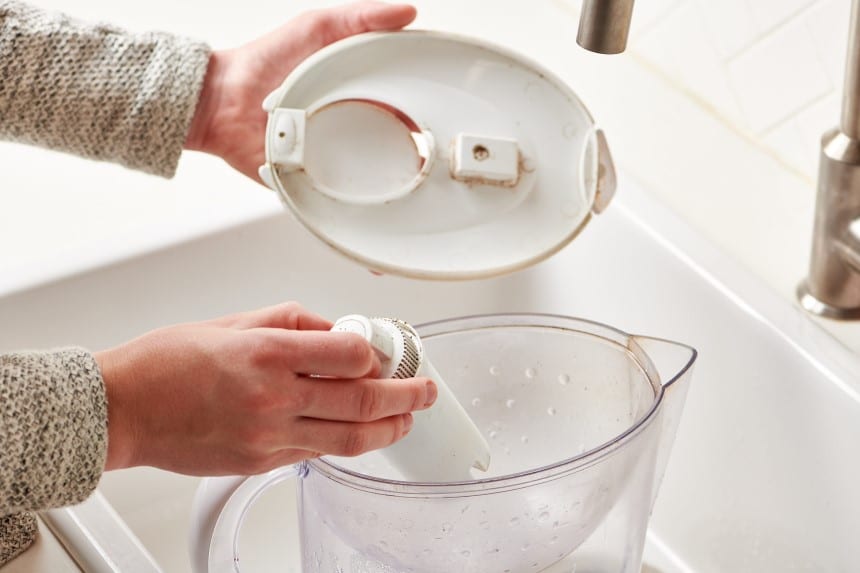 To clean a pitcher filter, you should follow these processes:
- Take the pitcher apart by removing the filter, pouring out water if there’s any, and separating the lid from the reservoir.
- Wash the pieces with dish soap and lukewarm water.
- Make a mixture adding a teaspoon of white vinegar to a cup of warm water.
- Place the filter into this mixture and let it soak for about an hour.
- Squeeze the filter dry after soaking and also let it air dry or set it upside down on a dish towel.
- Reinsert it.
Cleaning Water Filters by Brands
Since the water filter market is like every other market having different brands you can make a pick from, it is imperative to discuss how to talk about how to clean water filters by their brands as the processes of Water Filter A might differ from B. According to most reviews, one of the sturdiest models must be the Express Water Whole House Water Filter which, thanks to its reinforced construction, is the most reliable option out there.
Zero
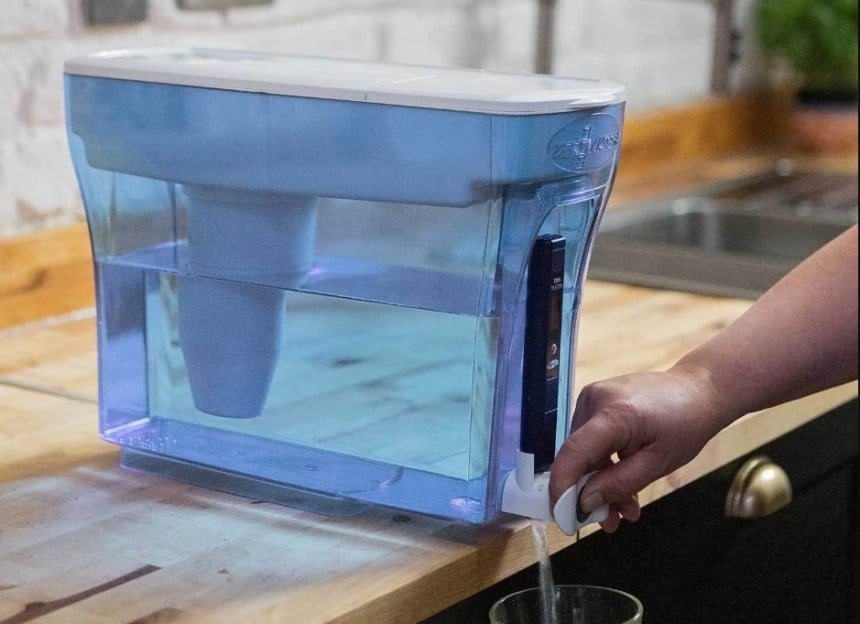 This is the guide to cleaning Zero water filter:
- Add water in the filtered pitcher and record the time the water took to purify.
- Check whether the water filter is clogged through the air making the process slow.
- If the problem of slowness is there you need to go ahead still with these processes if not, unscrew the filter again and attach it back where it was.
- Poke multiple holes that are not too deep with needle or a pair of tweezers on the front of the filter.
- After, use tap water to check if the filter has been cleaned or if the obstruction is still in place reducing the speed of filtration process. If so, move on to the next step.
- Measure the TDS level of unfiltered water and since Zero water filter are supposed to bring TDS level down to Zero, it would be noted that the higher the TDS concentration before filtering, the harder the filter is working.
- If the TDS level is down to zero, then the filter is no longer fit for use it is recommended that you should replace it rather than clean it.
Pur
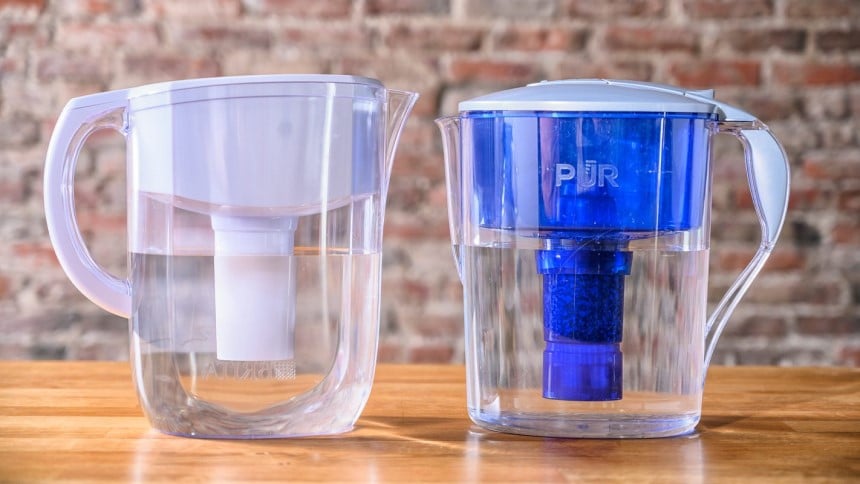 Cleaning a Pur water pitcher dispenser and filter requires no technological know-how:
- Handwash pitcher, lid, pour tray and removable filter cover with mild soap water.
- Rinse well and damp with cloth.
- Insert the filter back into the pour tray and push down, then twist clockwise to lock.
Brita
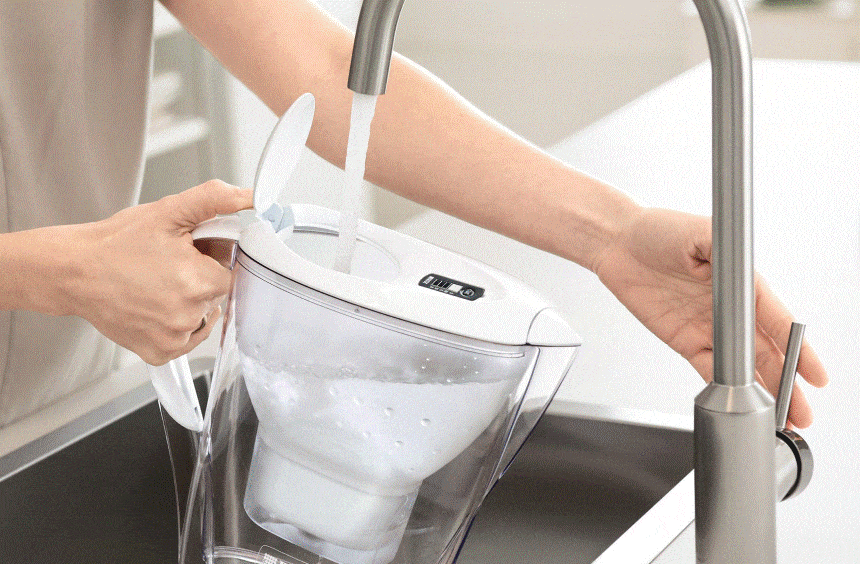 Brita as a brand is low maintenance when it comes to upkeep and care and this can be said for all the models of their products.
- Wash your hands with soap and water then remove filter from filter bag.
- Soak the filter upright in cold water for 15 minutes.
- Hold filter upright under cold, running water for a few seconds.
Katadyn
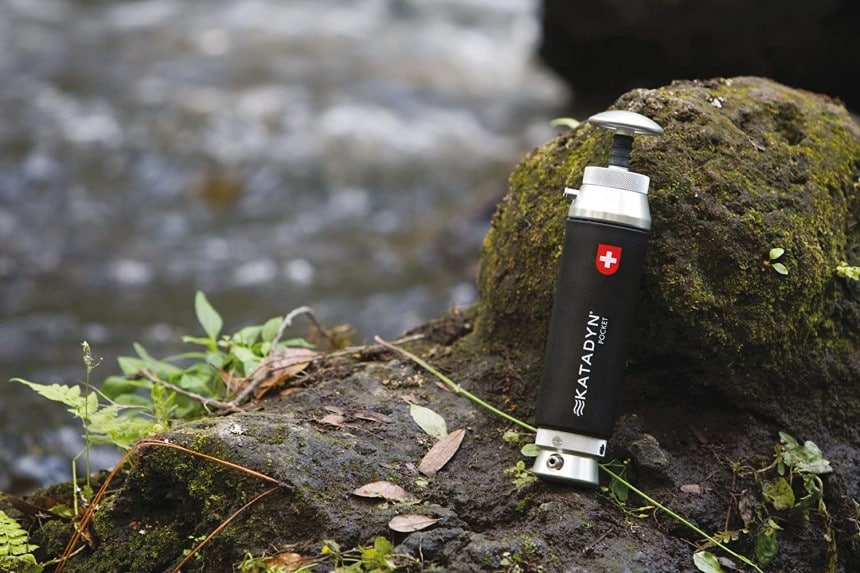 Feel free to adopt these steps when cleaning your water filter:
- Run a sanitizing solution (1 litre of water and 1 tablet of micropur or 2 tablespoons of household bleach) through the filter.
- Disassemble and take out the filter.
- Push down on the quick release lever on the bottom to release the input hose.
- Take off the handle.
- Put al the pieces somewhere with good airflow where they can quickly dry.
Berkey
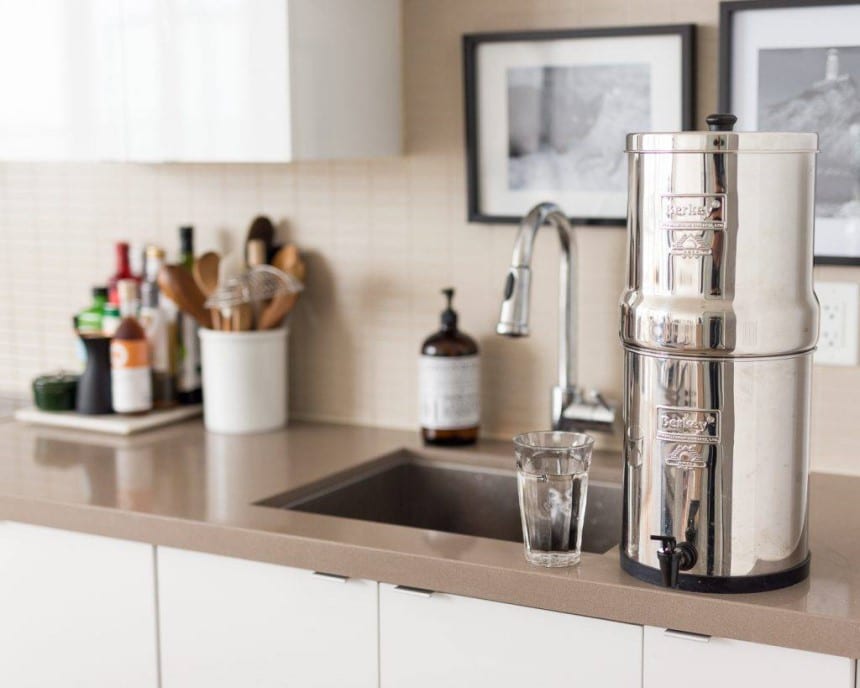 Follow these instructions to clean your Berkey water filter:
- Empty water from the system.
- Remove the top container and set it on a table.
- Remove the fluoride filters if installed and remove the Berkey element by unscrewing the wing nut.
- Hold the filter under a running tap with the exit hole pointed up.
- Scrub the black surface of the element with a 3M Scotch Brite pad for several minutes avoiding the use of detergents on filter.
- Set the elements aside and wash your hands.
- Reinstall the filters in the system.
MSR
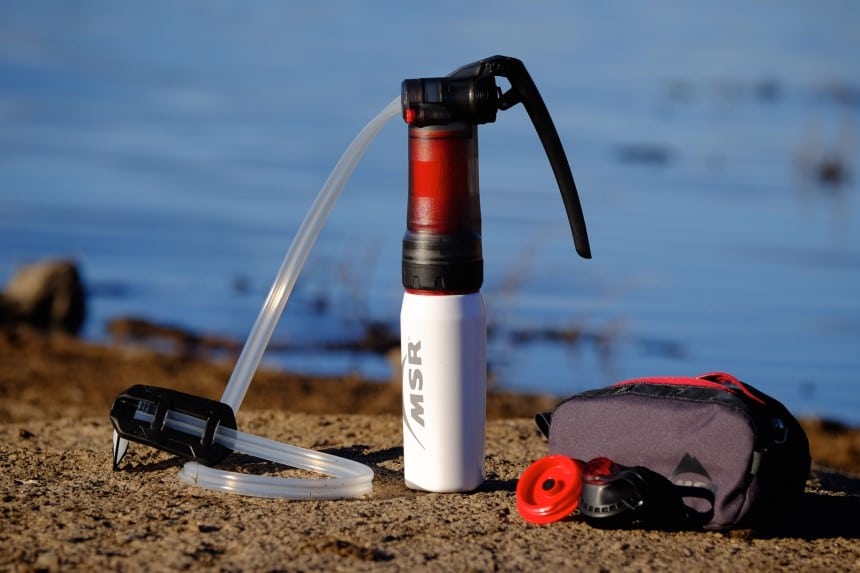 Follow these simple steps to clean your MSR water filter:
- Pump water until it is half full.
- Shake the filter for 20 seconds.
- Remove the in-let hose from the nozzle.
- Squeeze dirty water out.
- Reconnect the hose.
Bobble
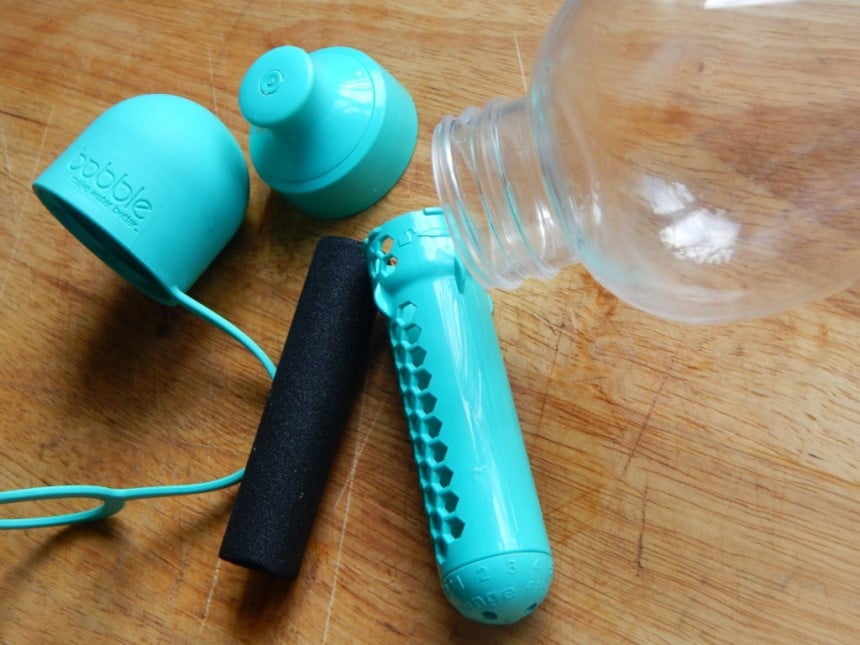 Clean your water filter with this guide:
- Fill a dish pan with water and add to three drops of dish soap.
- Dip the Bobble including the filter in the soapy water.
- Wipe the outside with a sponge and scrub the inside with a bottle brush.
- Rinse the Bobble and filter under a steady stream of cold water.
- Dry excess moisture with a dry dish rag.
- Put the Bobble and filter in a dish rack to let them airdry.
Final Thoughts
There is no gainsaying in to say that it is important to clean your water filters so they can in turn do a good job in cleaning your drinking water. We also hope that this article has been able to shed more light on the grey areas you might be having on how to clean a water filter. Happy hydrating!